
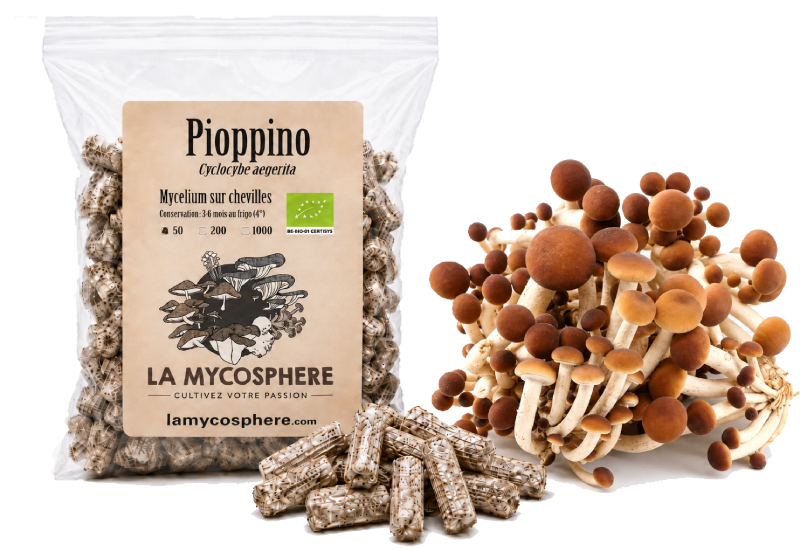
Organic Piopino Mushroom - Plug Spawn
- 🍄 Plug Spawn – PIOPPINOS: Cyclocybe aegerita (syn. Agrocybe aegerita), ideal for growing on hardwood: poplar, willow, alder, beech, oak.
- 🌱 EASY PLANTING: Drill holes, insert the stakes, then seal the holes (wax recommended). All you need is a drill and a suitable wood drill bit.
- 🌳 HOST PLANT COMPATIBILITY: The pioppino prefers poplars and willows, but also produces fruit on elms, beeches, oaks, and alders.
- 🍽️ FLAVOR & NUTRIENTS: Firm flesh with a slightly nutty, woody flavor; a natural source of fiber and protein.
- 🌍 ORGANIC PRODUCTION: Certified “BE-BIO-01,” grown without pesticides or GMOs, environmentally friendly.
- 📏 PRACTICAL INFORMATION: ~50 dowels per log measuring 100 cm × 20 cm. Storage: ~3 months in the refrigerator (2–6 °C) before use.
Recommended equipment for log-shaped cakes
To inoculate logs, make sure you have the necessary equipment to drill holes, insert the plugs, and protect the inoculation sites.


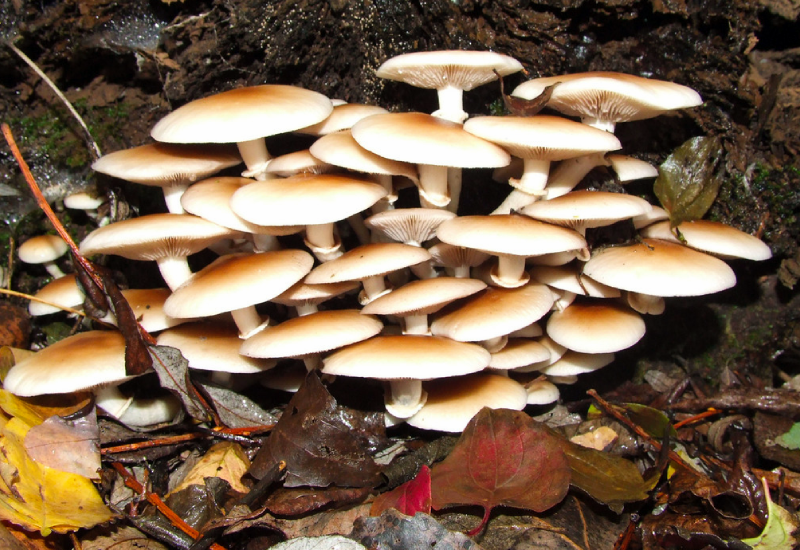
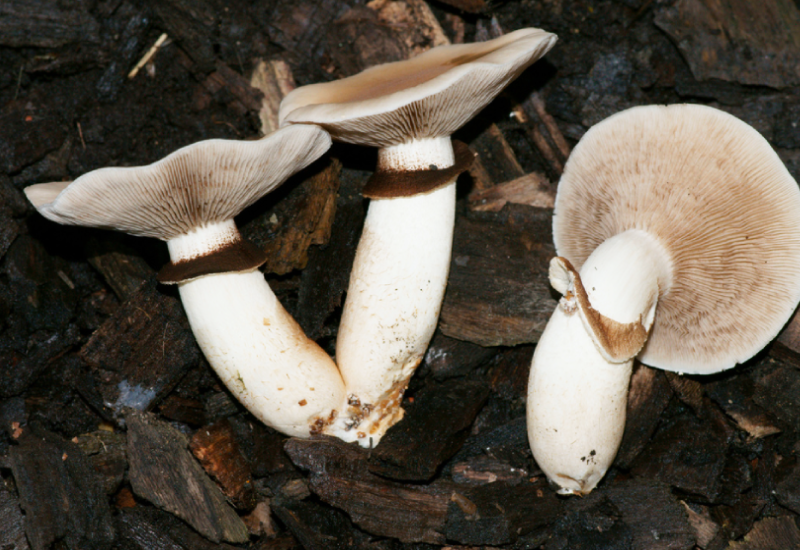
Cyclocybe aegerita, more commonly known as Piopino or Poplar bolete, is one of the first mushrooms cultivated by humans. The Romans had already developed some primitive techniques for its cultivation. This mushroom often grows on piles of wood chips, particularly from poplar trees, but can also be found on other species such as elm, willow, alder, or even elderberry.
Characteristics:This is an excellent edible mushroom with a crisp texture and a slightly sweet, nutty flavor. The caps, measuring between 3 and 5 cm, are dark brown at first, then gradually lighten to a creamy beige as they mature. The stems, if picked young, are not overly fibrous and remain crisp when cooked.
Kitchen
-
Perfect for stir-frying (in a wok or skillet), grilling, in risotto, with pasta, or with white meats.
-
Harvest when young: the stems will still be tender; on older plants, remove the tougher base.
-
Dries very well (concentrated flavors); store in a cool place: 3–5 days.
How do I do that?
For more information, we recommend reading our guide: "Growing on logs"
How do you inoculate logs with plug spawn ?
Required equipment
- A log or piece of wood that has been recently cut (no more than 3 months old). Avoid softwoods. Most hardwoods are suitable. Contact us if you would like more specific information. Log diameter: between 10 and 25 cm. Length: between 50 and 150 cm.
- Mycelium on dowels: For a length of 1 m, multiply the diameter of a log by 2.5. Example: A log that is 1 m long and 20 cm wide requires 20 × 2.5 = 50 dowels.
- Drill and drill bit 8–9 mm
- Hammer
- Optional: vegetable wax, beeswax, paraffin, or green clay to cover the holes.
Instructions
- Wash your hands before touching the mycelium to maximize your chances of success.
- Drill holes in your log. The holes should be slightly deeper than the height of the plug. Space the holes about 10 cm apart. A 1-meter-long log requires about 50 dowels.
- Insert the dowels into the holes using a hammer. The dowels should not protrude from the holes.
- Cover with wax. The wax protects the mycelium from insects and diseases, as well as from drying out. If you don’t have wax, you can also use paraffin, cheese wax, or green clay.

- Be patient: Store your logs in a shaded area sheltered from the wind. Avoid direct contact with the ground, which could attract small insects and cause contamination. For example, you can place them on a pallet covered with a tarp. In hot weather, occasionally pour a watering can of water over the logs to prevent them from drying out.
- Harvest and enjoy your crop. A log prepared under the right conditions can produce mushrooms for 3 to 5 years.
For more information, we recommend reading our guide: "Growing on logs"
Notes
The best times to inoculate logs are in the fall, winter, and early spring, before the sap begins to flow.
The main threat to this crop is drought: cover the wood with a tarp or a cover if necessary to keep the logs moist, especially during incubation.
We fill our bags by weight, so there may be slight variations from the stated amount.
We inoculate the logs with a mixture of spores and sawdust. It is therefore normal to find some sawdust mixed in with the logs. This remaining sawdust can also serve as inoculum.
Our commitment to quality:
 We produce our mycelium in laboratory conditions, which ensures the purity of the strains and optimal quality.

Customer Reviews
Great article
Perfect—on time and good quality for all three varieties ordered.
Very satisfied!
Reviews in Other Languages
A new life at Pioppino awaits the logs
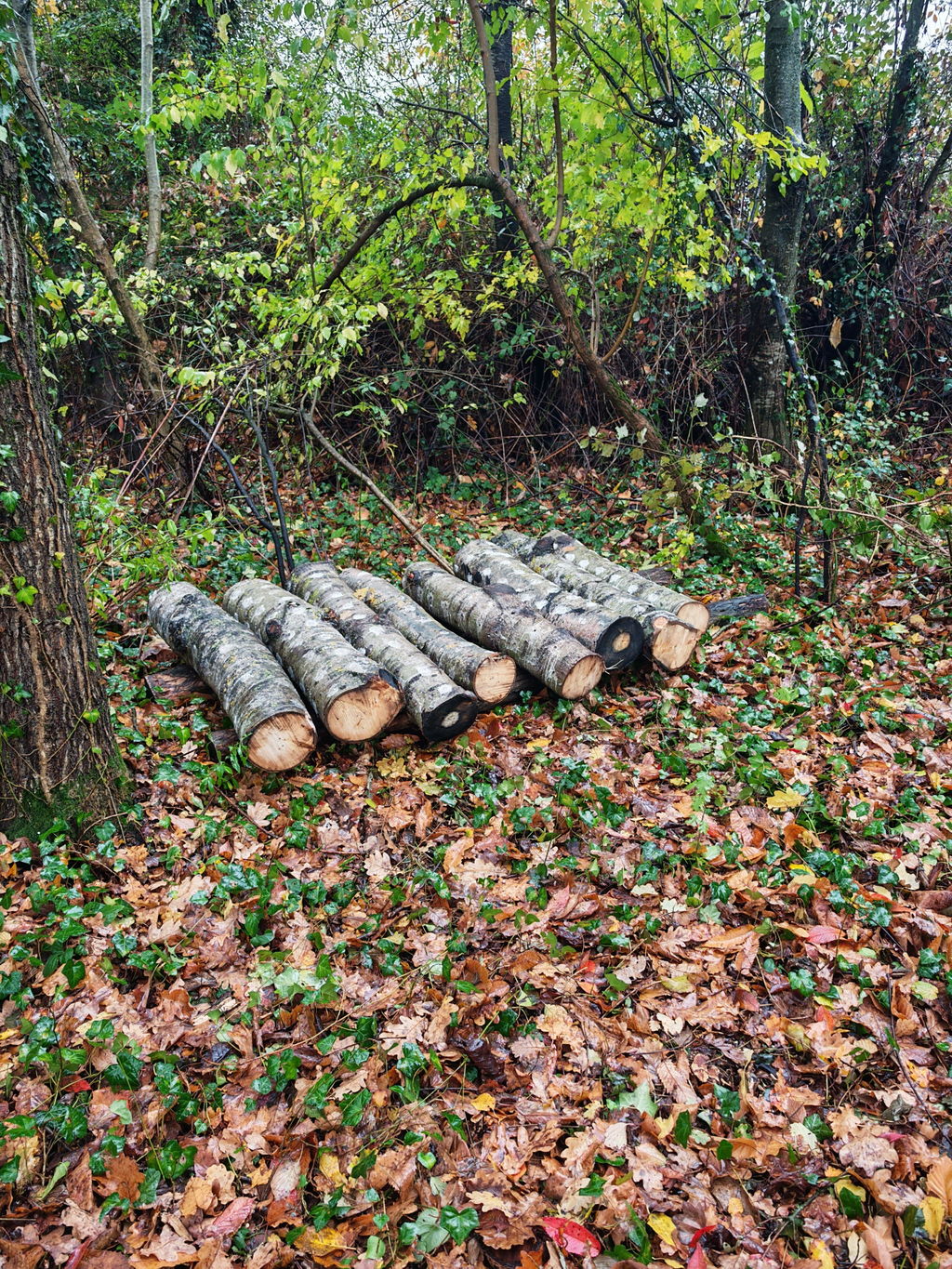
The Piopino mycelium was well packaged, and the instructions were very clear. Overall, good feedback from the supplier. I do hope that the hardware will be worth the effort.

Organic Shiitake - Plug Spawn
€7.80–€59.00
Organic Blue Oyster Mushroom - Plug Spawn
€7.80–€59.00
