
Organic Lion's Mane Mushroom - Plug Spawn
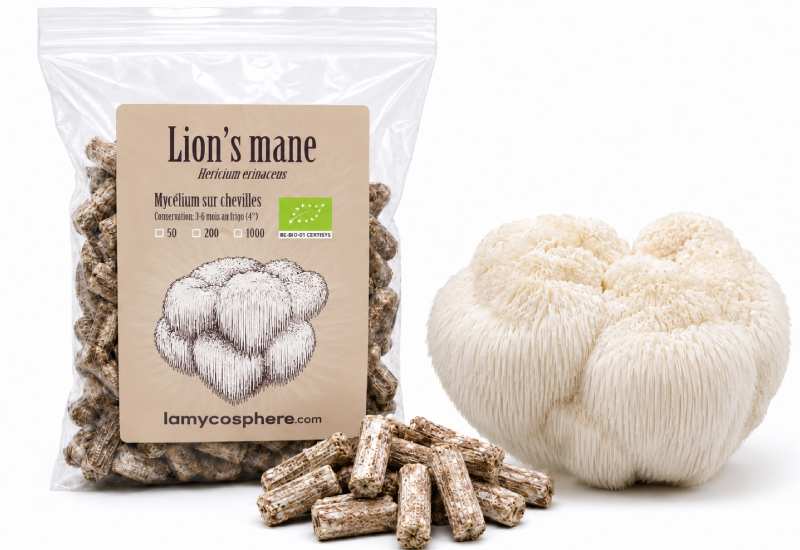
- 🍄 LION'S MANE MUSHROOM PLUG SPAWN: Hericium erinaceus, ideal for growing on hardwoods such as oak, beech, and cherry.
- 🌱 EASY PLANTING: Simplified planting using wooden stakes—all you need is a drill and a suitable wood drill bit.
- 💪 HEALTH BENEFITS: Rich in beta-glucan, hericenones, ergosterol, and essential amino acids (glutamine, glycine, and others), offering numerous health benefits.
- 🌍 ORGANIC PRODUCTION: Certified "BE-BIO-01," grown without pesticides or GMOs, environmentally friendly.
- 📏 PRACTICAL INFORMATION: 50 dowels per log (100 cm x 20 cm). Storage: Keep dowels in the refrigerator for about 3 months before use.
Recommended equipment for log-shaped cakes
To inoculate logs, make sure you have the necessary equipment to drill holes, insert the plugs, and protect the inoculation sites.


Hericium erinaceus
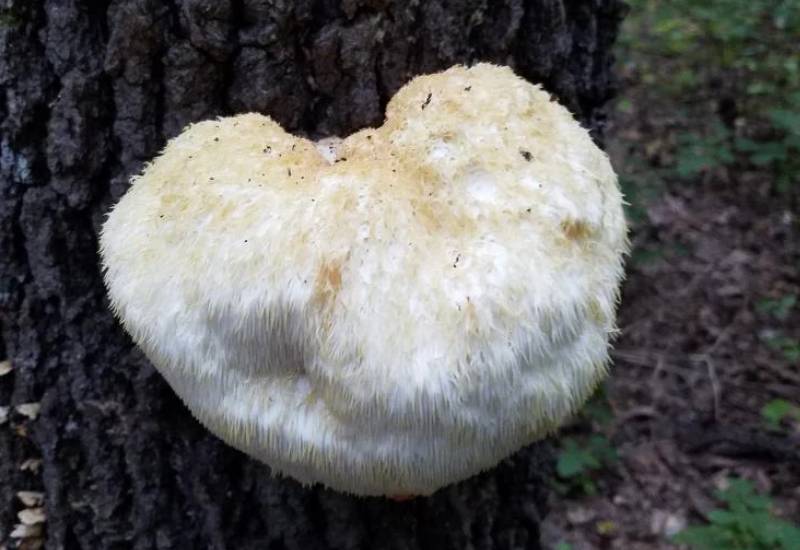
Lion's Mane mushrooms(Hericium erinaceus, also known as lion’s mane, white pom-poms, lion’s mane, or yamabushiitake)offerunique flavors reminiscent of seafood and coconut, with a texture similar to meat. They are easy to prepare in slices and can be sautéed like most other mushrooms.
These mushrooms, which are related to sheep's foot mushrooms, producespines(small white projections) when they reach maturity. We harvest them before the spines grow longer than 5 mm to preserve their flavor and extend their shelf life.
Lion's mane mushrooms grown on logs take about 12 to 18 months to fully colonize the log. After that, they will produce large mushrooms for several years.
For more information, we recommend reading our guide: "Growing on logs"
How do you inoculate logs with plug spawn ?
Required equipment
- A log or piece of wood that has been recently cut (no more than 3 months old). Avoid softwoods. Most hardwoods are suitable. Contact us if you would like more specific information. Log diameter: between 10 and 25 cm. Length: between 50 and 150 cm.
- Mycelium on dowels: For a length of 1 m, multiply the diameter of a log by 2.5. Example: A log that is 1 m long and 20 cm wide requires 20 × 2.5 = 50 dowels.
- Drill and drill bit 8–9 mm
- Hammer
- Optional: vegetable wax, beeswax, paraffin, or green clay to cover the holes.

Instructions
- Wash your hands before touching the mycelium to maximize your chances of success.
- Drill holes in your log. The holes should be slightly deeper than the height of the plug. Space the holes about 10 cm apart. A 1-meter-long log requires about 50 dowels.
- Insert the dowels into the holes using a hammer. The dowels should not protrude from the holes.
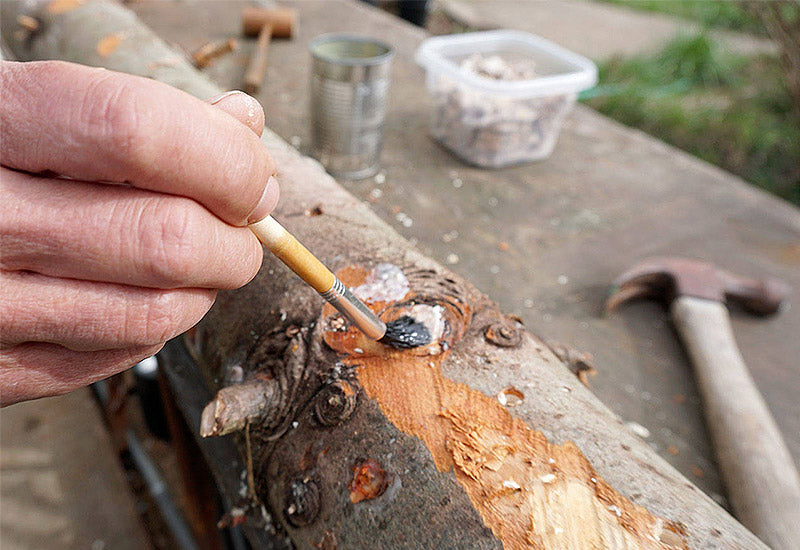
- Cover with wax. The wax protects the mycelium from insects, diseases, and drying out. If you don’t have wax, you can also use paraffin, cheese wax, or green clay.

- Be patient: Place your logs in a shaded area, sheltered from the wind. Avoid direct contact with the ground, which could attract small insects and cause contamination. For example, you can place them on a pallet covered with a tarp. In hot weather, occasionally pour a watering can of water over the logs to prevent them from drying out.
- Harvest and enjoy your crop. A log prepared under the right conditions can produce mushrooms for 3 to 5 years.
Wood species
We recommend beech, poplar, and maple wood, butlion’s mane on most hardwood species. It also seems to thrive on walnut wood, whereas few mushroom varieties do well on this species. Oak wood can also be used.
Notes
The best times to inoculate logs are in the fall, winter, and early spring, before the sap begins to flow.
The main threat to this crop is drought: cover the wood with a tarp or a cover if necessary to keep the logs moist, especially during incubation.
We fill our bags by weight, so there may be slight variations from the stated amount.
We inoculate the logs with a mixture of spores and sawdust. It is therefore normal to find some sawdust mixed in with the logs. This remaining sawdust can also serve as inoculum.
Our commitment to quality:

We produce our mycelium in laboratory conditions, which ensures the purity of the strains and optimal quality.
We produce our mycelium using 100% organic methods, and all our products are certified "BE-BIO-01, Agriculture Belgique" by CERTISYS.


Organic Shiitake - Plug Spawn
€7.80–€59.00
Organic Blue Oyster Mushroom - Plug Spawn
€7.80–€59.00
