

Oyster mushroom fruiting block
Harvest between 1.5 and 2 kg of oyster mushrooms over three harvests. This variety can be grown year-round; the ideal temperature is between 12° and 20° C.
The bundle can be stored in the refrigerator for up to two weeks until ready to use
Grow them indoors (kitchen, garage, basement). Oyster mushrooms need a little light to grow. Opt for indirect sunlight, and avoid anything that might dry out the substrate: drafts, radiators, direct sunlight. Oyster mushrooms like humidity but don’t like being constantly soaked.
Open the package
- Make a slit in the side of the bag at the level of the growing medium. Be sure to remove all the air from the bag to prevent mushrooms from growing inside it.
- Place the bag with the opening on its side. Keep it moist until buds appear.
- Maintain a humidity level of 80 to 90% while the mushrooms are growing, spraying water as needed.
Eryngii mushroom fruiting block
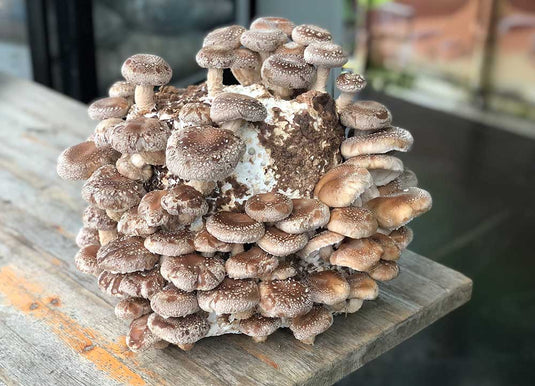
Harvest between 1 and 1.5 kg of shiitake mushrooms over 1 to 2 harvests. This variety can be grown year-round; the ideal temperature is between 12° and 20° C.
The bundle can be stored in the refrigerator for 1 to 2 weeks until ready to use
Grow them indoors (kitchen, garage, basement). Shiitake mushrooms need a little light to grow. Opt for indirect sunlight, and avoid anything that might dry out the log: drafts, radiators, and direct sunlight. The optimal humidity is 80–90%.
To increase humidity, you can spray water on it or water it once or twice a day. You can also cover the bundle with clear plastic with small holes punched in it (you can cut the plastic in half if necessary). This will allow the bundle to breathe and the mushrooms to grow while maintaining a humid environment.
Open the package
- Remove the plastic bag completely, preferably over a sink, and rinse the bundle with clean water.
- Place the bundle on a plate.

Lion's Mane fruiting block
Harvest up to 1.5 kg of fresh mushrooms over 3 to 4 harvests. Lion's Mane mushrooms can grow year-round at temperatures ranging from 10°C to 25°C. During fruiting, avoid drafts and temperature fluctuations; they thrive in high humidity but cannot tolerate being wet.
The bundle can be stored in the refrigerator for up to two weeks until ready to use
Grow indoors (kitchen, garage, basement). Lion's mane prefers indirect sunlight. Avoid anything that might dry out the root ball: drafts, radiators, direct sunlight.
Our tip if you don't have a growing space: place a clear plastic bag with small holes punched in it over the bundle. Remove the plastic twice a day to let fresh air in and ventilate the bundle.
Open the package
- Start by squeezing all the air out of the bag; if necessary, make a small slit at the top of the bag. Fold the plastic over to the side; to hold it in place, you can tape it down or lay it flat on that side.
- Next, make two 5-cm crosswise cuts on each side of the bundle.
- The substrate should remain moist. If necessary, mist the opening with water.

fruiting block
Harvest between 0.75 and 1 kg of oyster mushrooms over 2 to 3 harvests. Slightly more delicate to grow than gray oyster mushrooms, eryngii mushrooms keep very well thanks to their firm, dense flesh and low water content. The stem has a texture similar to that of Bordeaux porcini mushrooms. They have a light almond flavor and can be prepared as carpaccio.
The bundle can be stored in the refrigerator for up to two weeks until ready to use
Eryngii mushrooms prefer cool temperatures between 15 and 18°C. They require high, consistent humidity at the start of fruiting, which gradually decreases until harvest.
Indoors (kitchen, garage, basement). King oyster mushrooms need a little light to grow. Opt for indirect sunlight, and avoid anything that might dry out the bundle: drafts, radiators, direct sunlight. King oyster mushrooms like humidity but don’t like being constantly soaked, as they are more susceptible to disease than oyster mushrooms, for example.
2 fruiting modes:
- Open the top of the bag, leaving 15–20 cm of plastic above the substrate, and wait for the primordia (mushroom "buds") to appear, then gradually lower the plastic until it is level with the substrate.
- Make a slit in the side of the bundle at the level of the substrate and squeeze the air out of the bag through this opening. Just like with oyster mushrooms, keep it moist. This technique takes a little longer and tends to yield slightly less. However, it promotes the development of the caps more than the stems, resulting in mushrooms that are slightly different in taste and texture.

Black Pearl fruiting block
Black pearls can be cultivated in the same way as oyster mushrooms or king oyster mushrooms: they can be grown using the "top fruiting" method, on the top of the bag, or by making an incision on the side of the bag.
Download the user manual for Black Pearl
Reishi fruiting block
Harvest between 500 grams and 1 kilogram of fresh mushrooms per harvest.
Grow indoors (kitchen, garage, basement). Reishi thrives in warm temperatures (20–30°C). Depending on the humidity of the location, you may need to mist it regularly with a spray bottle. However, avoid letting the substrate sit in standing water. Reishi thrives in indirect sunlight (remember that it grows in the "understory"). Avoid anything that might dry out the log: drafts, radiators, direct sunlight.
To grow reishi mushrooms, we recommend the following technique. Leave the plastic bag sealed, trying to maximize the air inside the bag. If necessary, you can open the bag slightly to let air in and then reseal it with tape. The goal is to create a mini greenhouse with a very high CO2 level inside. This will promote the development of the stems ("antlers"). This stage can take between 30 and 60 days.
When the stems are about 15 cm long—which is roughly two-thirds of the air space in the bag—you can open the top of the bag to allow air to enter, which will encourage the caps to develop. Let it grow for another 30 days or so, and your reishi is ready to harvest.
Download the user manual for Reishi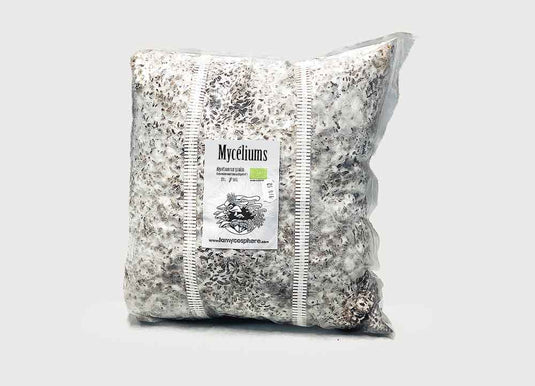
Grain-based mycelium
Grain-based mycelium is used to inoculate substrates such as straw or sawdust
Our mycelium can be used for both indoor and outdoor cultivation. The substrates typically consist of straw, sawdust, or fresh logs. These provide the carbon source for the substrate, which serves as the mushrooms’ primary food source.
This substrate can be enriched with various nitrogen-rich materials such as wheat bran, alfalfa, or coffee grounds. This helps increase yields while repurposing certain byproducts and incorporating a circular dimension into mushroom production.
See the guide to mycelium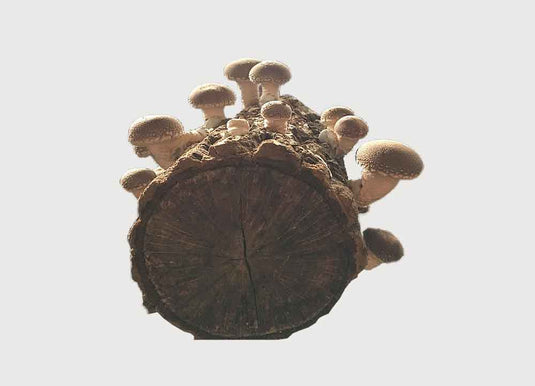
Log cultivation
Growing mushrooms on logs using mycelium on pegs is a fairly simple way to grow mushrooms in your garden. This allows you to make good use of your wood scraps while producing high-quality mushrooms over the long term.
This is a process that requires some patience, as it takes 12 to 18 months for the first mushrooms to appear... After that, a good log can produce mushrooms every year for up to five years. Once the logs have been inoculated, the main task is simply to maintain a constant level of moisture in the logs.
You can grow different types of mushrooms in the same place, which will produce at different times of the year.
See the guide for logs
Oyster mushroom growing kit
Harvest up to 1 kg of oyster mushrooms over three harvests. This variety can be grown year-round; the ideal temperature is between 12° and 20° C.
The kit can be stored in the refrigerator for up to 6 weeks until ready to use
Grow them indoors (kitchen, garage, basement). Oyster mushrooms need a little light to grow. Opt for indirect sunlight, and avoid anything that might dry out the substrate: drafts, radiators, direct sunlight. Oyster mushrooms like humidity but don’t like being constantly soaked.
Open the package
- Cut a cross in the plastic with a clean knife and position the indirect light at an angle of 10° to 20°
- Water daily around the opening to keep the soil moist
- After 10 to 15 days, before the caps open up, harvest the oyster mushrooms by gently twisting the cluster around itself. Enjoy your meal!
- For a second harvest, seal the bag for 1 to 2 weeks, then soak it in water overnight in the fridge. Cover, water, and harvest!
