
CVG, All-in-One, and Monotub: substrates for mushroom cultivation
CVG substrate, All-in-One, and single-tube culture
Are you looking to prepare a growing medium made from coconut fiber, vermiculite, and gypsum, inoculate a ready-to-use bag, or grow plants in a container or single-tube system? This page will help you choose the solution that best suits your skill level and project.
CVG or wood substrate: choose the right base material
The substrate should always be selected based on the ecology of the mushroom being cultivated. A CVG substrate and a wood-based sterilized substrate are not suitable for the same purpose.
Key takeaway: CVG and All-in-One are best suited for coprophilous mushrooms, or for certain species that thrive in rich, moist, and well-structured substrates. They are typically used for growing in trays, boxes, or single-tube systems.
For wood-growing mushrooms such as oyster mushrooms, shiitake, reishi, lion’s mane, or pioppino, we recommend our organic, wood-based sterilized substrates, which are much better suited to these species.

Which solution should you choose?
If you're trying to decide between the All-in-One Mushroom Grow Bag, the CVG kit, individual ingredients, sterilized spawn, or wood substrate, this chart will help you make a quick decision:
| Your goal | Recommended product | Level / Approach |
|---|---|---|
| Inoculate a ready-to-use bag directly using a syringe filled with liquid culture | CVG Sterile All-in-One Bag, 1.5 kg | Easy |
| Prepare a complete CVG substrate | Complete hydroponic kit with coconut coir, vermiculite, and gypsum | DIY |
| Grow your mycelium on grain before mixing with CVG | Sterilized grain bag | Intermediate |
| Adjust the texture and moisture retention of the mixture | Horticultural vermiculite for CVG growing media | CVG ingredient |
| Create your own CVG blend using the individual ingredients | Coconut fiber, vermiculite, and gypsum | Flexible |
| Growing oyster mushrooms, shiitake mushrooms, reishi mushrooms, lion’s mane mushrooms, or pioppino mushrooms | Organic, wood-based sterilized growing media | Lignicolous |
| Work in a tub or single-tub setup using a suitable container | Monotub North Spore | Coming soon |
The 3 easiest ways
All-in-One Mushroom Grow Bag
A sterile bag containing both a nutrient solution and a CVG substrate. It is designed to be inoculated directly, with minimal handling.
See the All-in-OneComplete CVG Kit
The perfect solution if you want to make your own growing medium using basic ingredients: coconut coir, vermiculite, and gypsum.
View the CVG kitGrains + CVG ingredients
To work in several steps: inoculate a sterilized grain, then mix it with a CVG substrate prepared separately.
View sterilized grainsUnderstanding the CVG substrate
CVG is a blend of coconut fiber, vermiculite, and gypsum. It is valued for its lightweight structure, moisture-retention capacity, and ease of use in container, box, or single-tube growing systems.
Our solutions for CVG and monotub cultivation
Choose based on your level of experience: ready-to-inoculate bags, a complete kit, individual ingredients, or wood substrate for wood-dwelling species.
CVG Sterile All-in-One Mushroom Grow Bag, 1.5 kg
The easiest option if you want to avoid preparing the grain and substrate separately. The bag contains a nutrient base and CVG substrate in a single sterile bag.
- Fewer steps
- Compact size
- Sterile substrate ready for inoculation
- A good starting point before moving on to the monotube

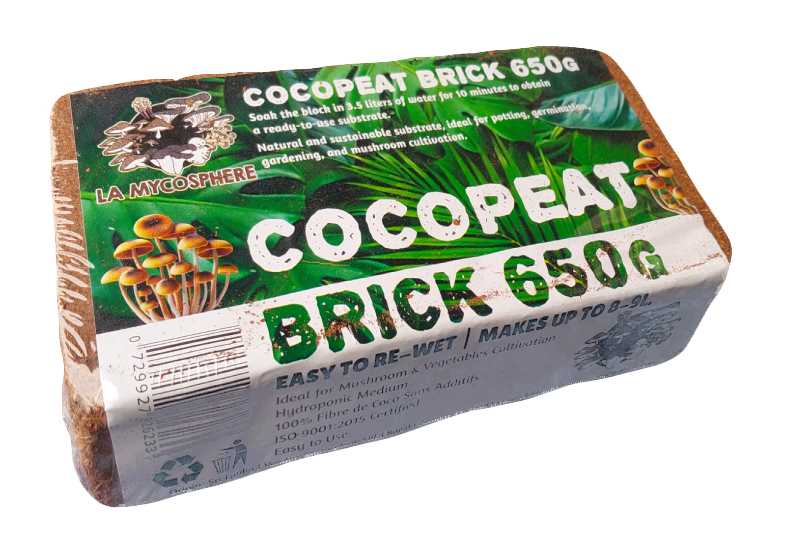
Complete hydroponic kit: coconut coir, vermiculite, and gypsum
The kit combines coconut coir, vermiculite, and gypsum so you can make your own CVG growing medium. It’s the best option if you want to learn how to make your own mix and control the ingredients.
- Perfect for learning
- Suitable for bins and single-tub units
- Allows you to control your volume
- For use with grain-based mycelium

Sterilized grain bags
Sterilized grains allow you to grow your mycelium before combining it with a suitable CVG substrate. This is a good option if you want to work in several stages.
- A two-step process
- More flexibility
- Compatible with liquid culture
- Convenient for preparing multiple mixtures

Coconut fiber, vermiculite, and gypsum
The most flexible solution if you regularly prepare your growing media and want to adjust your ratios based on your workflow.
MycoWood: a sterilized, organic wood-based growing medium
CVG is generally not the best choice for mushrooms that grow naturally on wood. For these species, use a sterilized wood-based substrate instead.
- Oyster mushrooms
- Shiitake mushrooms
- Reishi
- Lion's Mane
- Piopino

Monotub North Spore
We will soon be offering North Spore single-tube systems, designed for container growing with effective humidity control and air exchange. This page will be updated as soon as they arrive.
- Growing in containers or single-tube systems
- Cleaner installation
- Compatible with the CVG approach
- Coming soon to La Mycosphère

How do you use a CVG substrate?
The general principle is simple: prepare or select a suitable substrate, grow a vigorous mycelium, and then combine the two under hygienic conditions.
For which varieties should CVG be used?
CVG is primarily used for coprophilous mushrooms (which grow naturally on manure-rich soil) and certain exotic species that thrive in rich, moist, and well-structured substrates.
Important: Regulations vary by country and region. Always make sure that the plant species you are growing are permitted in your area.
Why choose La Mycosphère?
At La Mycosphère, we produce and select growing media for growers of all skill levels: beginners, enthusiasts, experienced growers, and professionals.
: Our mycelium and substrates are prepared in Gembloux.
All-in-One, CVG, sterilized grains, wood substrates, bags, and accessories.
We help you choose between CVG, wood, grains, or a ready-to-use solution.
From ready-to-inoculate kits to individual ingredients for more independent growers.
Clear explanations to help you understand the basics of mushroom cultivation.
A product line designed for different types of mushrooms and substrates.
Frequently Asked Questions
What is the difference between a CVG kit and an all-in-one bag?
The CVG kit contains the ingredients needed to prepare a growing medium made from coconut coir, vermiculite, and gypsum. The All-in-One bag already contains a nutrient solution and CVG growing medium in a single sterile bag, ready for inoculation.
Is CVG suitable for oyster mushrooms?
Not really. Oyster mushrooms are wood-decaying fungi: they grow naturally on wood or plant matter rich in cellulose. For oyster mushrooms, we recommend our organic, wood-based sterilized substrates instead.
Is CVG suitable for shiitake, reishi, or lion’s mane mushrooms?
No, these are generally not the best substrates for these species. Shiitake, reishi, and lion’s mane are wood-decaying mushrooms. A sterilized wood-based substrate is much more suitable.
What is the purpose of vermiculite in a CVG growing medium?
Vermiculite helps retain moisture and improve the structure of the growing medium. It results in a more uniform, well-aerated mixture that is easier to work with.
What is the purpose of gypsum in CVG?
Gypsum provides calcium and sulfur. It also helps improve the texture of the mix and reduce soil compaction.
Can I use sterilized seeds with a CVG growing medium?
Yes. Sterilized grains allow mycelium to grow on the grains. Once the grain is fully colonized, it can be combined with a CVG substrate suitable for your species and cultivation method.
Are North Spore single-tube models already available?
Not yet. We plan to offer them soon at La Mycosphère. This page will be updated as soon as they become available.
What's the easiest option to start with?
If you want to skip preparing the growing medium, choose the All-in-One bag. If you want to learn how to prepare your own growing medium, choose the complete CVG kit. If you’re growing wood-based species, opt for a sterilized organic wood-based growing medium instead.
Are you trying to decide between CVG, All-in-One, and wood substrate?
For a simple and compact solution, choose the All-in-One. To prepare your own mix, choose the CVG kit. For oyster mushrooms, shiitake, reishi, lion’s mane, or pioppino, opt for our MycoWood organic, wood-based sterilized substrate.