
Chicken of the Woods - Plug Spawn
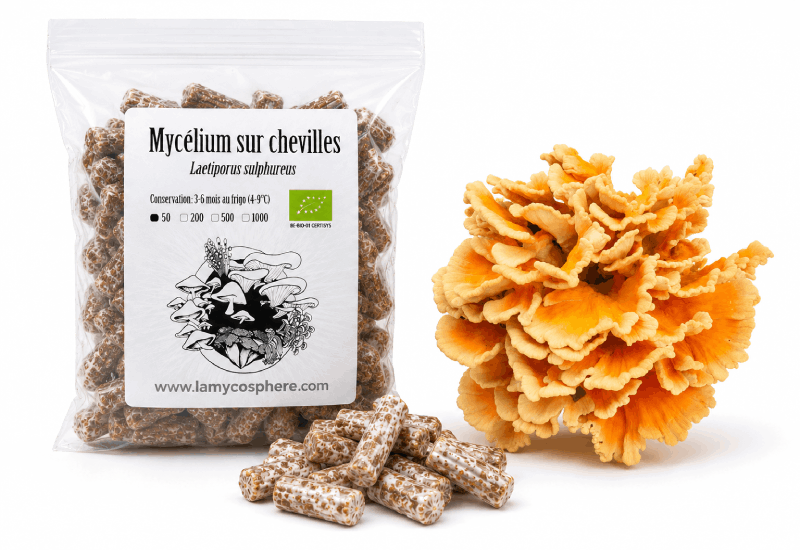
- 🍄 PLUG SPAWN – CHICKEN OF THE WOODS: Laetiporus sulphureus (sulfur polypore), ideal for hardwoods: oak, chestnut, willow, poplar, cherry, and beech.
- 🌱 GUIDED PLANTING: Drill holes, insert the stakes, then seal the holes (wax recommended). Use the “totem” method or standard logs. All you need is a drill and a suitable wood drill bit.
- 🌳 COMPATIBILITY WITH TREE SPECIES: Prefers oak and chestnut; also bears fruit on willow, poplar, cherry, and beech. Avoid conifers (especially yew).
- 🍽️ FLAVOR & NUTRIENTS: Firm, fibrous texture with a flavor reminiscent of chicken; rich in fiber and beta-glucans; holds up well when stir-fried or breaded.
- 🌍 ORGANIC PRODUCTION: Certified “BE-BIO-01,” grown without pesticides or GMOs, environmentally friendly.
- 📏 PRACTICAL INFORMATION: ~50 dowels per log measuring 100 cm × 20 cm. Storage: ~3 months in the refrigerator (2–6 °C) before use.
Recommended equipment for log-shaped cakes
To inoculate logs, make sure you have the necessary equipment to drill holes, insert the plugs, and protect the inoculation sites.


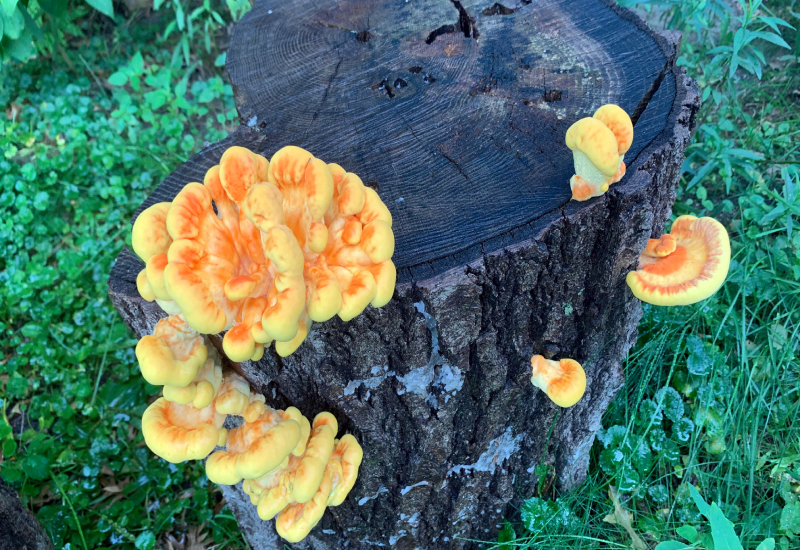
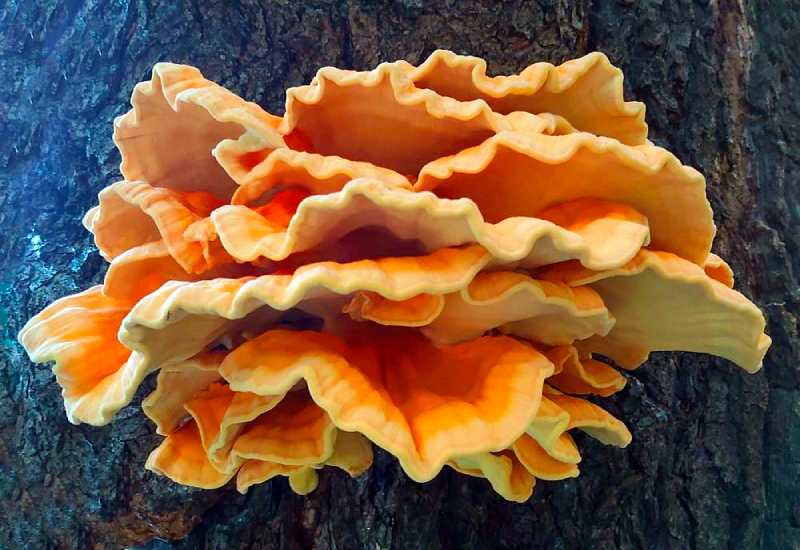
Laetiporus sulphureus, also known as Chicken of the Woods, Sulfur Polypore, or poulet-des-bois, is a spectacular mushroom that forms large, sulfur-yellow to orange-colored brackets, often overlapping one another.
Highly sought after when young, the sulfur polypore is prized for its firm, fibrous flesh—which sometimes has a texture reminiscent of chicken—and its mild, slightly lemony flavor. It is a unique and impressive species to cultivate on logs, and is particularly appealing to enthusiasts of rare edible mushrooms.
Why grow the sulfur polypore?
- A spectacular mushroom: large yellow-to-orange gills, very decorative on logs.
- Culinary appeal: When young, its flesh is firm, tender, and fibrous, with a unique texture.
- A rare species to cultivate: ideal for experienced hobbyists looking to try something other than the classic shiitake and oyster mushrooms.
- Growing on wood: suitable for hardwood logs, particularly oak.
- Harvests can sometimes be bountiful: fruit production may be irregular, but spectacular when conditions are right.
Characteristics of the mushroom
- Latin name: Laetiporus sulphureus.
- Common names: Chicken of the Woods, Sulfur Polypore, poulet-des-bois.
- Appearance: rosette-shaped clusters, sulfur yellow to orange, with paler, wavy edges.
- Underside: fine, lemon-yellow pores, without lamellae.
- fruiting period fruiting generally from late spring to fall, depending on the climate and humidity.
- Ideal harvest age harvest young, tender, juicy, and crisp edges. As it ages, the flesh becomes tough.
Recommended wood species
The sulfur polypore grows naturally on various hardwood trees. For cultivation on logs, choose fresh, healthy, and recently cut wood.
- Highly recommended: oak.
- Possible species: chestnut, cherry, wild cherry, willow, poplar.
- Avoid: conifers, softwoods, and yew (Taxus baccata).
Important: Never consume sulfur polypore harvested from yew trees or potentially toxic wood. For cultivation, use only identified and suitable hardwood logs.
Growing specifications
- Level: intermediate to advanced.
- Fuel: hardwood logs or firewood.
- Recommended diameter: about 15 to 25 cm.
- Recommended length: approximately 80 to 100 cm, or a size that fits your space.
- Inoculation period: fall, winter, or early spring, before sap flow resumes actively.
- Incubation: typically 12 to 24 months before the first fruiting.
- Conditions: a shaded, cool, moist location sheltered from the wind.
This species may produce more inconsistent yields than shiitake or oyster mushrooms. Yields depend heavily on the type of wood, the freshness of the logs, humidity, and the local climate.
Cooking Tips
The sulfur polypore is edible only when it is young, tender, and well cooked. It can be sautéed, breaded, made into a stew, or added to slow-cooked dishes.
- Texture: firm, fibrous, sometimes similar to chicken.
- Flavor: sweet, slightly tart, or lemony.
- Cooking: Always cook thoroughly. Do not eat raw.
- Storage: Young pieces can be blanched and then frozen.
Precautions Before Consumption
- Eat only young, tender, and clearly identified specimens.
- Never eat mushrooms growing on yew trees, conifers, or unidentified wood.
- Some people may have a digestive intolerance: always start with a small, well-cooked portion.
- If you are unsure about the identification, do not consume it.
How do you inoculate your logs?
For more information, we recommend reading our guide: Growing on logs.
How do you inoculate logs with plug spawn ?
Required Equipment
- Hardwood logs that were recently cut, ideally within the last 3 months.
- Mycelium on the stems of sulfur polypore.
- Drill with an 8- to 9-mm drill bit.
- Hammer for driving in anchors.
- Vegetable wax, beeswax, paraffin, or green clay to seal the holes.
Number of anchors to be provided
For a log about 1 meter long, multiply the log’s diameter by 2.5.
Example: A log with a diameter of 20 cm requires about 50 dowels.
Instructions
- Wash your hands before handling the mycelium.
- Drill holes in the log. The holes should be slightly deeper than the height of the dowels.
- Space the holes about 10 cm apart, in a staggered pattern across the entire surface of the log.
- Insert the dowels into the holes using a hammer. They should not protrude from the surface of the wood.
- Cover each hole with wax to protect the mycelium from drying out, insects, and contamination.

Incubation of Logs
- Place the logs in a shaded, moist spot that is sheltered from the wind.
- Avoid direct contact with the ground to minimize contamination and insect damage.
- You can place them on a pallet, two logs, or some stones.
- During dry periods, water the logs occasionally to prevent them from drying out.
- Maintain proper humidity throughout the incubation period.
The first fruiting bodies may appear after 12 to 24 months, often in the spring or fall, when there is sufficient moisture.
Important Notes
- The sulfur polypore is a species that is more challenging to cultivate and less predictable than shiitake or oyster mushrooms.
- Yields may be inconsistent, but the fruit production can be very impressive.
- Drought is the main enemy of log-based cultivation.
- Our bags are filled by weight: the exact number of dowels may vary slightly.
- We inoculate the logs with a mixture of spores and sawdust. It is normal to find some sawdust mixed in with the logs. This sawdust also contains mycelium and can serve as a supplementary inoculum.
Our Commitment to Quality
 We produce our mycelium in laboratory conditions to ensure the purity of the strains and optimal quality.

Our mycelium is organically produced, and our products are certified BE-BIO-01, Agriculture Belgique by Certisys.

Organic Shiitake - Plug Spawn
€7.80–€59.00
Organic Blue Oyster Mushroom - Plug Spawn
€7.80–€59.00
