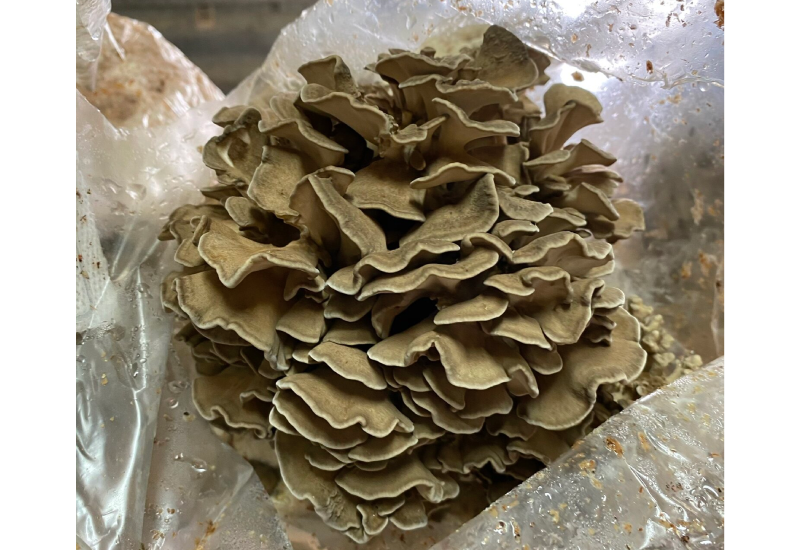
Organic Maïtake Fruiting Block
- 🍄 fruiting block Organic Maitake.
- 🍽️ NUTRITIONAL VALUE: Maitake mushrooms are rich in protein, vitamins, and minerals, making them perfect for a balanced diet.
- 🌍 ORGANIC PRODUCTION: Our blocks are certified organic ("BE-BIO-01") by Certisys (Belgium) and are guaranteed to be free of pesticides and GMOs.
- ⏳ AVAILABILITY: Depending on inventory, delivery times may vary from 3 days to 3 weeks. Please feel free to contact us for more details.
- ⏳ Note: Growing maitake mushrooms is a bit more complicated than growing other varieties, such as oyster mushrooms.


Characteristics of culture media:
- Ingredients: Water, sawdust, grains (including alfalfa), lime, mycelium. Net weight of the bale: ±3 kg.
- Dimensions: 20 x 15 x 20 cm (L x W x H)
-
Origin: Belgium (Mycosphere)
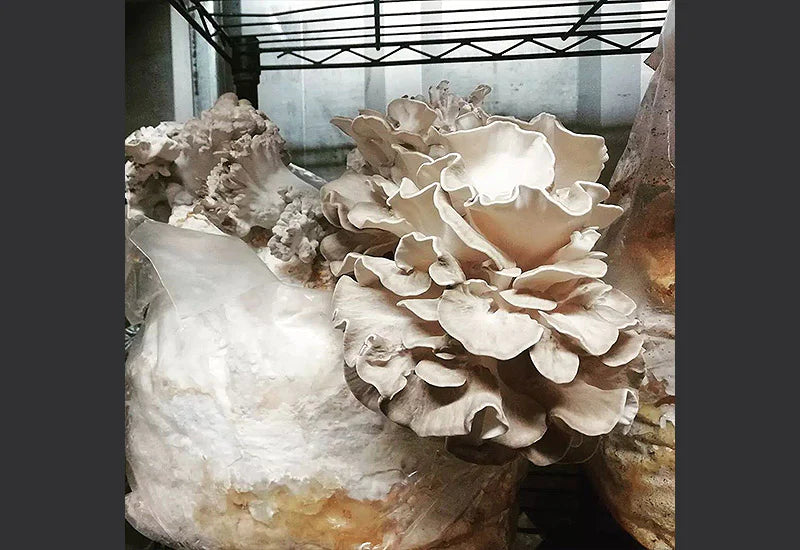
The maitake (Grifola frondosa), also known as the "tufted polypore" or "wood hen," is an edible mushroom known for its delicate flavor and its importance in Asian culinary traditions.
🔍 Our commitment to quality:

We produce our mycelium in laboratory conditions, thereby ensuring the purity of the strains and optimal quality.
Our mycelium is produced using 100% organic methods, and all our products are certified "BE-BIO-01, Agriculture Belgique" by CERTISYS.

pasteurized and inoculated mushroom growing medium" (Exemption No. EM470.J)
🌱 Cultivating Maitake Mushrooms
Substrate and Environment Maitake can be cultivated:
- Indoors: on enriched and sterilized substrates made from sawdust.
- Outdoors: on logs inoculated with pegs.
The ideal types of wood are chestnut and oak, which provide the nutrients necessary for its growth.
⚠️ fruiting is relatively complex and is best suited for experienced growers. Strict control of temperature andhumidity is essential for a harvest .
Instructions
1. Preparing the bag or bundle
Lift the plastic upward to create an air pocket above the substrate. The plastic should remain mostly closed to maintain a moist environment that will encourage the emergence of primordia (mushroom buds).
2. Location
- Place the bundle in a cool, shaded spot, away from direct sunlight.
- A basement, cellar, or garage can be an ideal location.
3. Hydration
- Make sure the bundle stays moist by lightly misting it with clean water on a regular basis.
- If the plastic is tightly sealed, this step can be shortened or even skipped altogether.
4. fruiting
- After a few weeks, primordia (small fungal structures) will begin to appear.
- When these mushrooms reach 2 to 4 cm in size, poke small holes in the plastic to improve air circulation and promote proper cap development.
5. harvest
- Harvest the mushrooms when the caps are fully formed, but before they start to dry out.
- If mold appears, harvest immediately to prevent it from spreading.
Additional tips
- Maitake mushrooms are susceptible to diseases often transmitted by fungus gnats.
- fruiting takes about 6 to 8 weeks.
Optimal conditions:
- Temperature: 10–18°C
- Humidity: high and constant at the start of fruiting, then slightly reduced as harvest approaches.
This process requires patience and attention to detail, but the result is well worth it!
It is also possible to grow maitake mushrooms outdoors. In early spring (March–April), dig a trench the size of the mushroom blocks, bury them, and cover them with 2 to 3 cm of soil. Keep the area slightly moist over the following weeks and months to encourage fruiting.
🌾 harvest Storage
Generally, only one harvest made from this type of plant. After harvest, you can try to get a second harvest burying the plant in the garden, leaving 2 to 3 cm of soil on top. This method may yield a small harvest at the beginning of the following summer.
Maitake mushrooms can be stored for about 1 to 2 weeks in a paper bag in the refrigerator. For longer storage, they can be dried. Drying not only extends their shelf life but also concentrates their active compounds, making them even more beneficial to health.