Growing mushrooms on logs is a fairly simple way to grow mushrooms in your garden. This allows you to make good use of your wood scraps while producing high-quality mushrooms over the long term.
This is a process that requires some patience, as it takes 12 to 18 months for the first mushrooms to appear... After that, a good log can produce mushrooms every year for up to five years. Once the logs have been inoculated, the main task is simply to maintain a constant level of moisture in the logs.
You can grow different types of mushrooms in the same place, which will produce at different times of the year.
Here are the three points in this guide:
Choosing mushroom varieties and tree species
Each type of mushroom is unique: some will fruit in late summer, such as king oyster mushrooms, while others will wait until winter, such as oyster mushrooms. Some varieties are more particular than others when it comes to the type of wood.
Generally speaking, all the varieties we sell on our website will grow on most hardwoods, but some combinations will yield better results, while others should be avoided.
Select your varieties and wood species based on the table below:

Generally, it is best to avoid coniferous wood, as it contains substances that inhibit mycelial growth (antifungals). Certain species are naturally adapted to coniferous wood, such as Trametes versicolor or sulfur polypores. Their mycelia have therefore developed defense mechanisms or are capable of breaking down these antifungal molecules.
oyster mushroom (Pleurotus pulmonarius ) can also grow on most pine trees, and even on various types of fir trees. However, you should expect slightly poorer results than on deciduous trees.
Harvest periods by variety

| Mushroom Variety | Jan | Feb | Tue | Apr | May | June | July | August | Sep | Oct | Nov | Dec |
|---|---|---|---|---|---|---|---|---|---|---|---|---|
| Shiitake | x | x | x | x | x | x | ||||||
| oyster mushroom | x | x | x | x | x | x | ||||||
| oyster mushroom | x | x | x | x | x | x | x | |||||
| oyster mushroom | x | x | x | x | x | x | ||||||
| Nameko | x | x | x | x | ||||||||
| Enoki | x | x | x | x | x | |||||||
| Reishi | x | x | x | x | ||||||||
| Chaga | x | x | x | x | x | x | ||||||
| Lion's Mane | x | x | x | |||||||||
| Maitake | x | x | x | x |
Notes:
- harvest periods harvest vary depending on local weather conditions and farming methods.
- The "x"s indicate the months when harvest generally possible.
- Mushrooms grown indoors may have harvest cycles, as they are less affected by seasonal variations.

When should you cut wood?
It’s best to cut wood during the dormant season—that is, in the fall and winter—before the sap begins to rise. There are two truly optimal times: in the fall, when the leaves begin to change color, and at the end of winter, just before the sap rises in the trees and the buds begin to open. This way, the bark will stay on the trunk longer, and the results will generally be better.
That said, if you have wood at any other time of year, it will eventually be broken down by fungi anyway (since fungi are the only organisms capable of breaking down the lignin in wood), so you might as well inoculate it with mycelium that will produce mushrooms you can eat.
We recommend using fresh wood that was cut no more than 2–3 months prior to inoculation. The optimal time for inoculation is within 2 to 3 weeks of cutting. Depending on the species, it is sometimes recommended to wait 2 weeks before inoculation: on the one hand, because this allows time for certain antifungal compounds to break down, and on the other hand, because the wood cells will already be weakened, which is more conducive to mycelium growth.
But the longer you wait, the greater the risk that other fungi will have already taken hold, leaving no room for the one you plan to inoculate into the log. This is also because the wood tends to dry out, especially in summer and winter, depending on the region. If the wood seems too dry, you can soak it in water for 12 to 24 hours before inoculation.
It is also recommended to use healthy wood that is free of disease and traces of other fungal mycelium.
During the first few weeks after inoculation, it is recommended that you protect your logs from severe frost: store them indoors, against a wall, and cover them with fallen leaves, straw, blankets, tarps, etc. Covering the logs will also help prevent them from drying out due to wind and sun, thereby providing optimal conditions for the mycelium to develop properly. The mycelium needs to breathe a little, so do not seal your logs in 100% airtight tarps.
Types of wood
Hardwoods such as oak, maple, or beech generally take longer to produce their first mushrooms, but they will also continue to produce mushrooms for a longer period of time.
On the other hand, birches and poplars will be quickly colonized by the mycelium and will yield sooner. However, in the long run, they generally produce fewer mushrooms over the years.
There are always exceptions: oyster mushrooms generally grow better on birch or poplar than on oak, but they also grow well on beech.
Of course, this list of essential oils is not exhaustive, so please feel free to experiment on your own. We’d love to hear your feedback if you’d like to share it with us via email: contact@lamycosphere.com
Diameters
We recommend a diameter ranging from 10 to 25 cm. Larger diameters will take longer to become colonized and will therefore take longer to produce, but they will also yield for more years. They are also more drought-resistant than smaller diameters. The wood is generally cut into 1-meter-long sections, which makes handling easier.
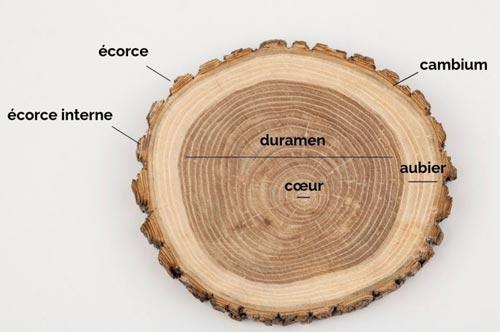
One exception regarding diameter: shiitake mushrooms. Shiitake mycelium feeds primarily on the sapwood, which is the outer layer of the wood. Therefore, a smaller diameter of 8 to 15 cm is recommended for shiitake mushrooms.
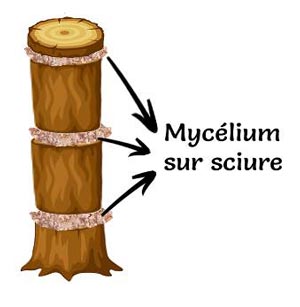
For diameters of 30 cm or more, we recommend the totem method instead: stack sections 20–30 cm high, with a 1-cm layer of mycelium on sawdust between each section. This method is particularly well-suited for oyster mushrooms, lion’s mane, and reishi.
The stumps of recently cut trees can also be inoculated and produce mushrooms over a period of 5 to 10 years. The root system contains a considerable amount of wood that can sustain the mycelium over the long term. The critical period occurs within 4 to 8 weeks following inoculation, as sufficient moisture must be maintained to allow the mycelium to establish itself deeply. Thereafter, the mycelium will have access to a large amount of carbon in the soil, while being able to absorb the moisture it needs from the soil.
Mycelium on dowels or sawdust?
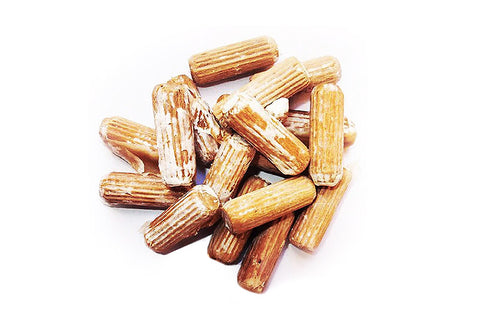
For small-scale log cultivation, mycelium on dowels works best. The only equipment needed is a drill, an 8- or 9-mm drill bit, a hammer, and possibly a paintbrush. This makes it accessible to everyone.
For larger-scale production (100–200 logs), it becomes more cost-effective to use sawdust-based mycelium. The advantage of this type of mycelium is its lower cost, as well as slightly faster colonization of the logs compared to pegs. This becomes a viable option only with the acquisition of certain specific tools, such as a manual/automatic inoculator and drill bits compatible with angle grinders. We also offer sawdust-based mycelium in 3- or 5-kg bags upon request; please contact us by email for more information on this.
How long does the mycelium last?
Mycelium grown on wood chips or sawdust keeps very well in the refrigerator. We recommend using it within 6 months of receipt. Ideally, of course, you should use it sooner, as the mycelium gradually loses its vitality, and the risk of contamination increases over time.
Calculate the number of anchors
Here’s a handy rule of thumb to quickly estimate your needs before using the detailed calculator.
This is an approximate estimate based on standard staggered drilling. Use the calculator to get an accurate result.
For a log that is 1.2 m long and 16 cm in diameter.
Log inoculation calculator for mushroom cultivation
Instructions:
1. Enter the number of logs you will be inoculating.
2. Enter the diameter of your logs.
3. Enter the length of your logs.
4. Select the spacing to use between each inoculation point within the rows.
5. Specify the spacing to use between each row of inoculation points.
6. View your results above the photos below.

Seeding (inoculation) methods

The traditional log-caking technique
- Use an 8- or 9-mm wood drill bit for inoculation with logs, or a 12-mm bit for inoculation with mycelium on sawdust. Drill holes 3 to 4 cm deep all around the log. The holes should be slightly deeper than the logs. Drill the holes in a staggered pattern approximately every 10 cm, with a spacing of about 8 cm between rows.
- Insert the dowels into the holes, using a hammer if necessary. The dowels should not protrude from the holes. For inoculation with mycelium on sawdust, a suitable tool is recommended.
- Cover with wax. The wax protects the mycelium from drying out, as well as from insects and diseases. If wax isn’t available, you can also use paraffin, cheese wax, or green clay. This is particularly important for mycelium grown on sawdust. For inoculation using dowels, it is possible to skip this step provided you take extra precautions to prevent the logs from drying out after inoculation.
- Please be patient. Depending on the variety, wood species, and diameter, you’ll need to wait between 6 and 18 months. Store your logs in a shaded area sheltered from the wind. Avoid direct contact with the ground, which could attract small insects and contamination from soil fungi. For example, you can place them on a pallet covered with a tarp or a mesh cover. In hot weather, occasionally pour a watering can of water over the logs to prevent them from drying out. During this initial incubation phase, the logs can be stacked. After 3 to 6 months, you can space them out. For oyster mushrooms, maitake, and reishi, we recommend burying them one-third deep in the ground so they can absorb moisture from the soil. Oyster mushrooms typically appear in late fall and early spring.
- Harvest and enjoy your crop. A log prepared under the right conditions can produce mushrooms for 3 to 5 years.
The strain technique
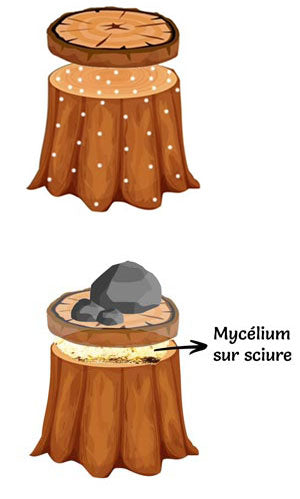
Log sections take longer to colonize and produce mushrooms than whole logs, but can produce mushrooms for nearly 10 years. The log sections must have been cut recently. They must also be placed in a shaded, moist location to prevent them from drying out. If possible, cut the strain to 40 cm above the ground to facilitate inoculation.
To prevent suckers or shoots from growing, you can “ring the trunk at the base” by removing a 3–4 cm strip of bark at the lowest point near the ground.
Log sections can be inoculated with mycelium on dowels or on sawdust (see images)
- Use an 8- or 9-mm wood drill bit for inoculation with plugs, or a 12-mm bit for inoculation with mycelium on sawdust. Drill holes 3 to 4 cm deep around the entire perimeter of the strain. The holes should be slightly deeper than the plugs. Drill the holes in a staggered pattern every 5 to 10 cm.
- Insert the dowels into the holes, using a hammer if necessary. The dowels should not protrude from the holes.
- Cover with wax. The wax protects the mycelium from drying out, as well as from insects and diseases. If wax isn’t available, you can also use paraffin, cheese wax, or green clay. This is particularly important for mycelium grown on sawdust. For inoculation using pegs, it is possible to skip this step provided you take extra care to prevent the logs from drying out after inoculation.
The Totem Technique
The totem method is particularly well-suited for logs with a large diameter (>20 cm). The logs are cut into sections 20 to 30 cm long, which are then layered in a sandwich-like arrangement with a layer of mycelium between each section. This method is particularly suitable for oyster mushrooms, lion’s mane mushrooms, and reishi mushrooms.
A 3-kg bag of mycelium on sawdust is sufficient to inoculate approximately 4 to 6 stacked sections of wood, each 30 cm in diameter.
- Cut 3 pieces that are 20 to 50 cm long. Also allow for a 5-cm overlap at the top.
- Place everything in a shaded, humid spot.
- The base of the totem can be a strain. Otherwise, start by laying a layer of brown cardboard on the floor. Spread a first layer of 2 to 3 cm of mycelium over the sawdust. Then build your totem with a layer of mycelium between each section, and finish with a 5 cm cap. A perforated bag can be used to completely cover the totem. This will allow for optimal mycelium growth, protected from drying out. Alternatively, you can also seal the edges with wax.
- For the first 6 months, make sure the mycelium doesn't dry out. You can remove the bag once you see that the logs are well colonized by mycelium.
- Once your logs are well colonized (6 to 12 months), the stack can be left as is for fruiting. You can also split it so that each section is in contact with the ground to prevent drying out.
For certain varieties, such as maitake, nameko, or reishi, it is recommended to partially bury the logs in the ground after colonization. This helps maintain consistent moisture levels and also stimulates fruiting contact with soil bacteria.
How can I tell if my logs are properly colonized?
You can look at one end of the wood. You should see mycelium (small white filaments). The mycelium doesn’t always cover the entire piece of wood, and that’s okay. At first, small patches of surface mold may develop along the edges; they feed on the sap residue seeping out of the wood. If the end has dried out (which you should try to avoid), the mycelium may not be visible. In that case, you can cut off a section to see the mycelium inside the wood.
Mushroom Care and Harvesting
The main risk associated with this cultivation method is drought. We therefore recommend covering the logs with a tarp or a cover if necessary to maintain moisture levels, especially during the incubation period.
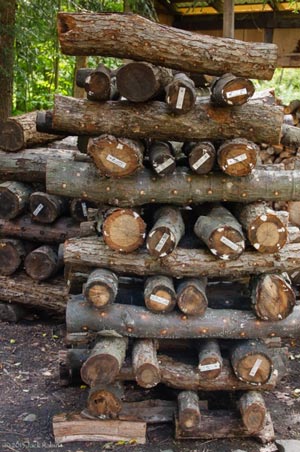
Place your logs in a naturally damp area: under trees, in bushes, etc. At first, avoid letting the logs touch the ground to prevent other native fungi from competing with our mycelium. If you have a lot of logs, you can place them on a pallet, or simply on small pieces of wood to raise them off the ground.
In case of drought, occasional watering may be necessary. Conversely, be careful not to keep them soggy or damp for too long; the mycelium needs to breathe.
On a commercial scale, you can use shade cloth and sprinklers to maintain high humidity during mushroom growth.
To thoroughly soak your firewood, it’s best to let it soak in a basin of water for 12 to 24 hours.
After the incubation period (6 to 12 months), the logs need to be spaced apart. This allows for better airflow, provides room for the mushrooms to grow properly, and also makes harvesting easier.
Mushrooms tend to grow naturally after cool, damp periods. This process can be accelerated by soaking the logs in a basin of cold water for 12 to 24 hours (avoid tap water, which contains chlorine, or let the water sit for a few hours beforehand). This works particularly well for shiitake mushrooms. Note that you should allow at least one month of rest between each harvest.
How long should you wait before harvesting the mushrooms?
The period during which the wood is colonized (incubation) varies depending on the type of fungus, the species of wood, the diameter of the logs, and the temperature. The duration can therefore range from 6 months to 2 years.
Oyster mushrooms grow faster and more vigorously than most other cultivated varieties. As a result, logs inoculated in late winter can produce mushrooms as early as the following fall. With shiitake mushrooms, for example, you’ll need to wait about 18 months. So don’t despair if you don’t see your beautiful mushrooms appear in the first year.
Most mushrooms need cool, moist conditions to grow. If these conditions aren't met, they won't grow.
The amount of mushrooms depends on many factors, so it’s impossible to give an exact figure. Generally, the total weight of fresh mushrooms harvested over the entire growing cycle accounts for between 10% and 20% of the log’s weight.Further reading
For further reading, you can download the following two PDFs:
Enjoy the show!
Your log-grown crops
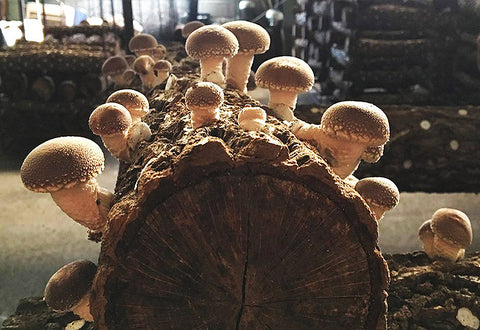
Organic Shiitake - Plug Spawn
€6.80–€48.90
Organic Blue Oyster Mushroom - Plug Spawn
€6.80–€48.90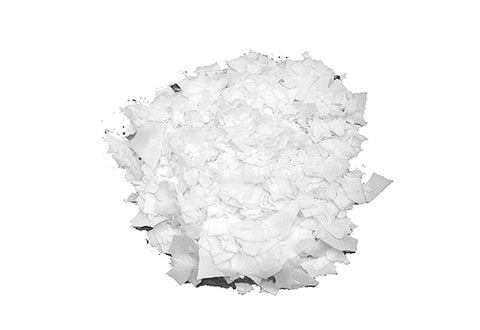
Wax for Log Cultivation
€2.90–€15.90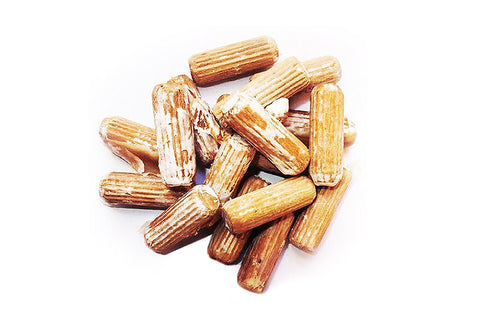
Organic Lion's Mane Mushroom - Plug Spawn
€16.90–€52.90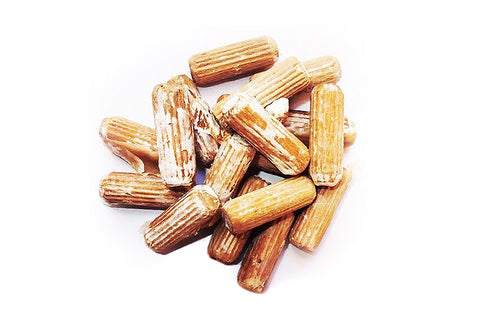
Italian Oyster Mushroom - Plug Spawn
€16.90–€52.90