
Let's go!
If you've never grown mushrooms before and want to grow them indoors at home, the easiest way to start is with Ready-to-Grow Mushroom Bags.
To take it a step further, you can make your own growing media using our DIY kits, or use our grain-based mycelium.
For outdoor cultivation, you can easily inoculate logs with our mycelium on pegs and mulch with our oyster mushroom mycelium .
Growing mushrooms
The products below will help you learn the steps involved in mushroom cultivation. We have mastered the production process for each of them and will guide you toward becoming self-sufficient.
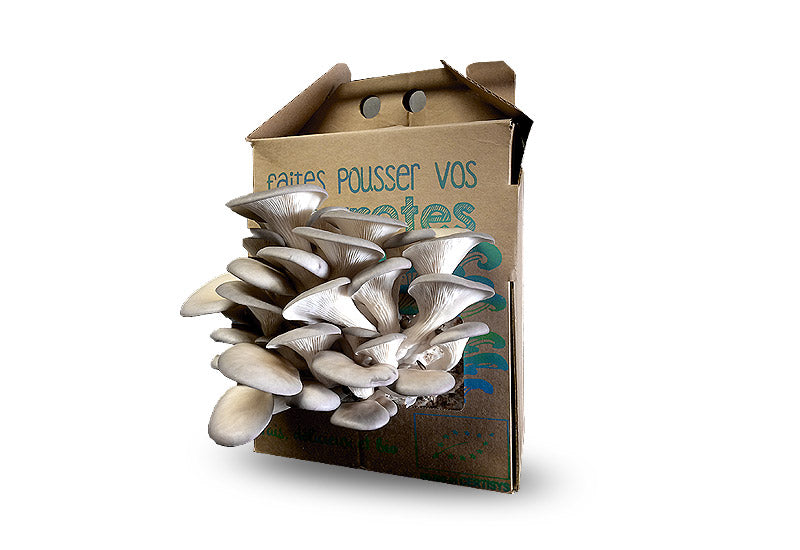
Ready-to-Grow Seed Bags (harvest)
If you've never grown mushrooms before, the easiest way to start is with ready-to-grow kits or blocks
The substrate is already colonized by mycelium and is ready to produce fruiting bodies. All you need to do is place it in a spot protected from drafts, with indirect light, maintain a constant level of humidity, and harvest it at the right time.
The most common varieties found in stores are button mushrooms, oyster mushrooms, and shiitake mushrooms. In fact, most mushroom farms today operate by purchasing ready-to-grow substrates from specialized suppliers.
We supply fruiting blocks, the same ones we use for our own production. We also offer an oyster mushroom kit with a more refined aesthetic, featuring boxes that we screen-print by hand.
By difficulty:
Level 1: Ready-to-grow mushroom spawn (button mushrooms, oyster mushrooms)
Level 2: Ready-to-grow logs of shiitake, king oyster mushrooms, and other varieties.
See all oyster mushroom kits and starter packs
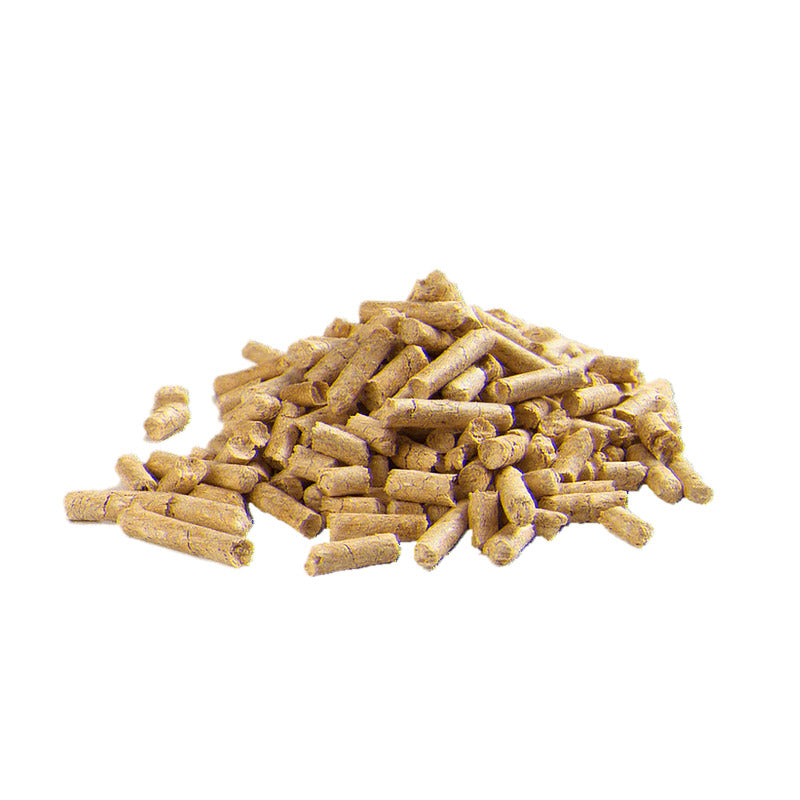
Substrates (food for mushrooms)
The substrate allows the mushrooms to grow after being inoculated with grain-based mycelium.
Our pelletized substrate is optimized for the production of wood-decaying fungi. We have carefully formulated the composition of the various ingredients to provide the mycelium with a substrate that offers an optimal balance of carbon-to-nitrogen ratio, sugars, and minerals.
These substrates are typically pasteurized using heat or lime before being inoculated with mycelium and placed in bags, buckets, or other containers, depending on the cultivation techniques used.
We also offer specialized growing bags. These are equipped with a microfilter that allows the mycelium to breathe while preventing the entry of potential contaminants (primarily bacteria and mold).
With the DIY kit, we also provide everything you need to make your own growing medium—all in one box.
For further reading:
You can learn how to make your own growing media.
You can then use local materials such as straw, sawdust, wood shavings, logs, coffee grounds, etc.
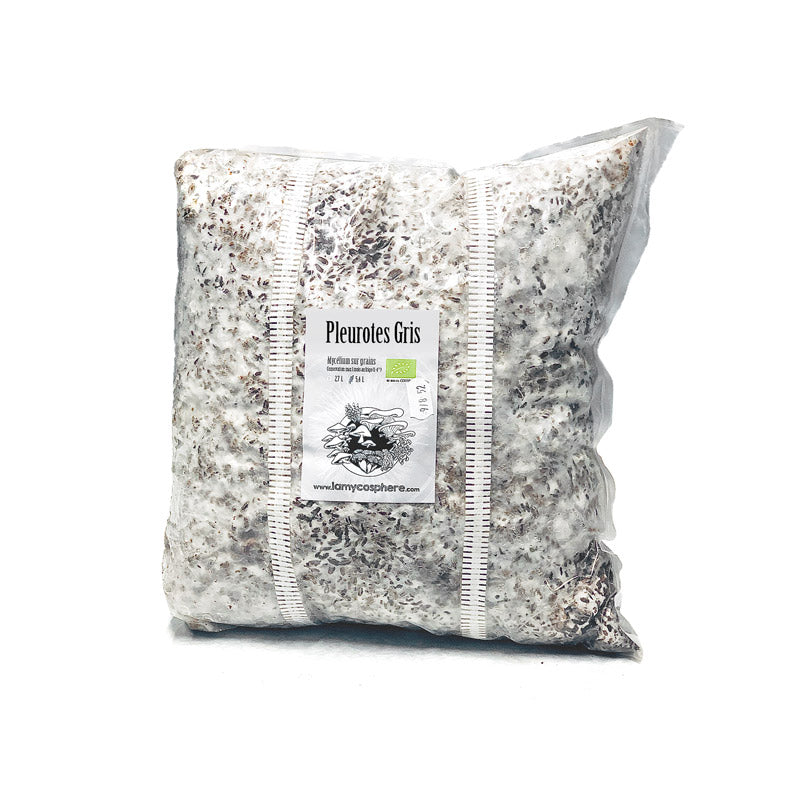
Grain-Based Mycelium (Seeds)
Seed production is the most delicate stage of the process, as it requires very strict hygiene standards. We produce our mycelium under laboratory conditions, which guarantees the quality and purity of our strains.
You can visit this page for more information: How to use our Mycelium
We grow our mycelium on organic cereal grains. These grains are an important source of sugars and nitrogen for the mycelium, giving it the vigor needed to colonize the substrates.
For further reading:
You can learn how to make "homemade mycelium" with just a few basic supplies: a pressure cooker, a Bunsen burner, a glove box, jars, rubbing alcohol...
We provide you with starter cultures in the form of liquid cultures or in Petri dishes.