Organic Lion's Mane Grain Spawn
- 🍄 LION'S MANE MUSHROOM GRAIN SPAWNup: strong: Hericium erinaceus, also known as yamabushiitake, has been traditionally used in Asia for centuries.
- 🌱 EXCELLENT GROWTH: Lion's Mane mycelium is known for its rapid growth and its ability to produce consistent, abundant harvests.
- 🍽️ FLAVOR PROFILE: A delicate flavor reminiscent of seafood, perfect for a variety of dishes.
- 🌍 LOCALLY GROWN AND ORGANIC: Certified "BE-BIO-01" by Certisys, guaranteeing an environmentally friendly, high-quality product.
To grow your lion's mane mushrooms:


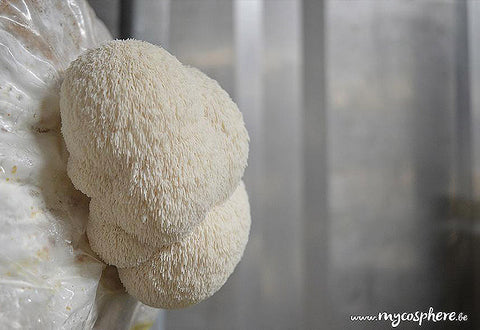
Lion's Mane — Hericium erinaceus, also known as lion’s mane, white pom-pom, lion’s mane mushroom, or yamabushitake — is a rare mushroom with a delicate flavor, sometimes reminiscent of seafood and coconut, and a texture similar to meat.
It’s easy to cook in slices, simply sautéed like most gourmet mushrooms.
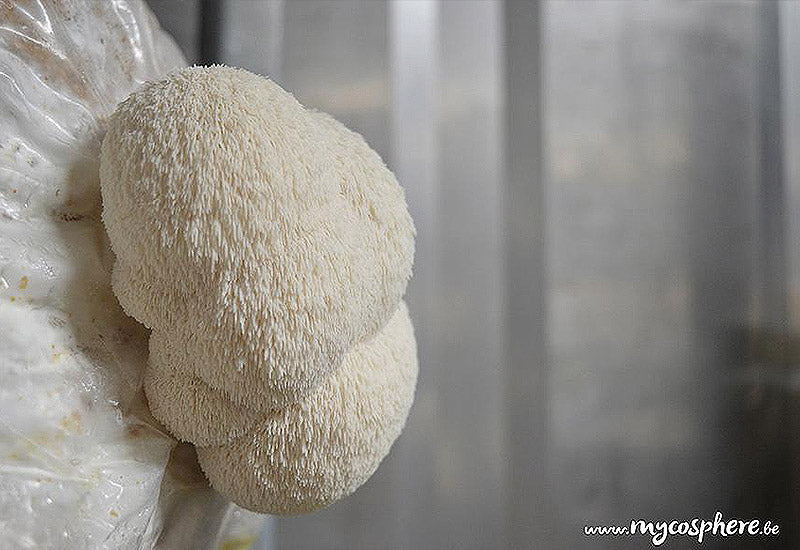
This mushroom produces small white spines, known as hydnes, when it reaches maturity. We harvest it before these spines grow to more than about 5 mm in order to preserve its flavor and ensure it keeps well.
Lion’s Mane is a rare and protected variety that cannot be harvested in the wild. In cultivation, it is primarily grown on enriched sawdust. It generally prefers indoor cultivation, although some growers are also experimenting with growing it outdoors.
💊 Lion’s Mane is naturally rich in beta-glucans, hericenones, ergosterol, and essential amino acids. It is valued for its natural composition as part of a varied and balanced diet.
Read more about the benefits of Lion's Mane
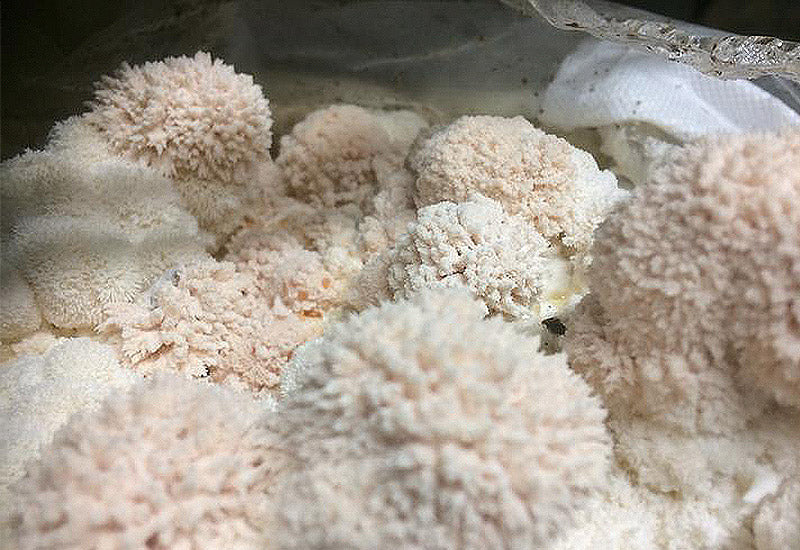
🔬 This is mycelium on grains, intended for making your own growing media.
If you're new to growing mushrooms, we recommend our ready-to-grow Lion's Mane mushroom logs instead, as they're easier to use.
❄️ Lion's Mane mycelium is thin and delicate, yet robust. It is best to use it within a week of receiving it.
Storage: up to 1 month in the refrigerator.
👉 See also: How to use our mycelium
Our Commitment to Quality

We produce our mycelium in laboratory conditions to ensure the purity of the strains and optimal quality.
Our mycelia are organically produced and certified BE-BIO-01 by Certisys under the Belgian Organic Agriculture program.

🌱 Growing conditions
Lion's Mane can grow year-round within a fairly wide temperature range. To encourage fruiting, avoid drafts, extreme temperature fluctuations, and direct water droplets on the mushroom.
It thrives in high humidity but needs good ventilation to prevent yellowing or deformation caused by excess CO₂.
🛠️ Recommended growing media
Lion’s Mane is typically grown on a substrate made from enriched sawdust that has been pasteurized or sterilized. Pasteurized straw and other lignocellulosic materials can also work, but the results are often more variable.
We recommend our ready-to-use substrate, which is particularly well-suited for wood-decaying fungi.
📊 Growing conditions
Inoculation: 5 to 10% grain mycelium relative to the weight of the moist substrate.
| Phase | Temperature | Humidity | Duration | CO₂ | Fresh air | Light |
|---|---|---|---|---|---|---|
| Incubation | 21–24°C | - | 10–14 days | - | - | n/a |
| Formation of primordial cells | 10–16°F | 95–100% | 7–15 days | 500–700 ppm | 4–8 cubic meters per hour | 500–1,000 lux |
| fruiting | 12–25°C | 85–95% | 4–8 days | 500–1,000 ppm | 4–8 cubic meters per hour | 500–1,000 lux |
📚 This information is taken from Paul Stamets’ book *Growing Gourmet and Medicinal Mushrooms *. It is provided for informational purposes only: results may vary depending on the substrate, strain, humidity, ventilation, and growing environment.
📈 Productivity
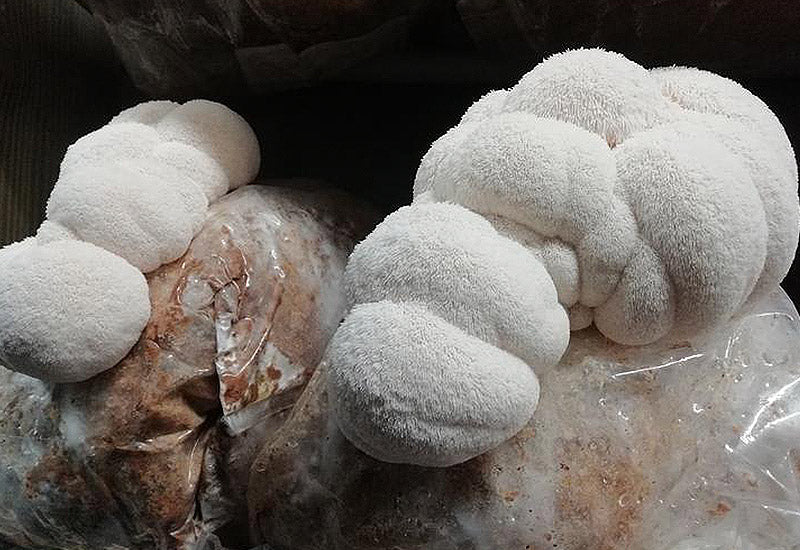
The fruiting bodies form white balls that are generally between the size of a golf ball and a large tennis ball, depending on the volume of the substrate and the growing conditions.
Estimated yield: 200 to 250 g of fresh mushrooms per 1 kg of moist substrate, over 2 to 3 harvests.
FAQ – Lion’s Mane
How long until the first harvest
Depending on your substrate and growing conditions: incubation for about 10 to 14 days, followed fruiting 1 to 2 weeks. Generally, allow 2 to 4 weeks in total.
What humidity level should you aim for?
Very high during the incubation phase, around 95–100%, then 85–95% during fruiting. However, direct condensation on the mushroom should be avoided.
Which substrate is the most reliable?
Enriched, pasteurized, or sterilized wood shavings remain the most reliable option. Straw can work, but the results are more variable.
Why does Lion’s Mane sometimes turn yellow?
Yellowing is often caused by direct water droplets, excessively dry air, or high CO₂ levels. Increase the flow of fresh air and mist the surrounding area rather than the plant itself.