
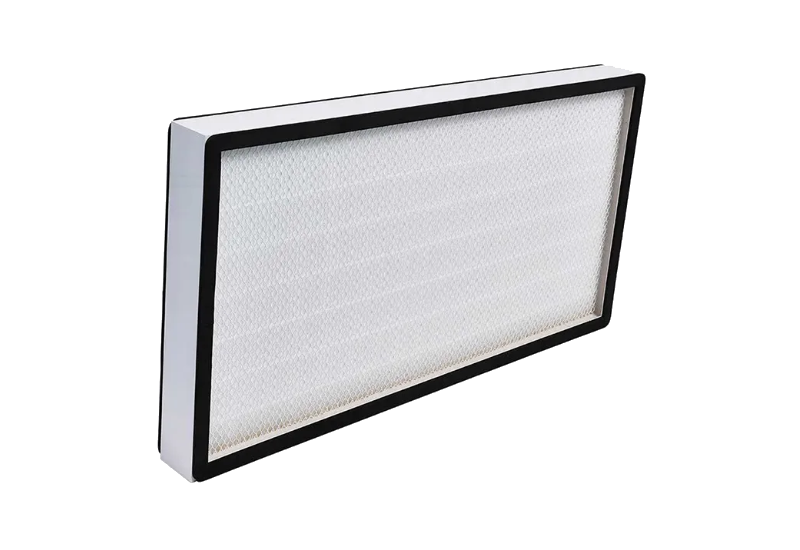
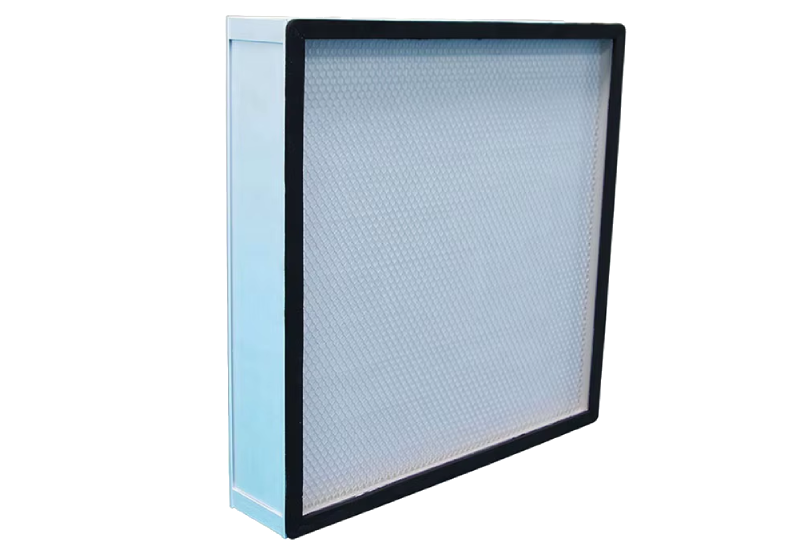
Replacement HEPA H14 Filters – PureFlow 600 & PureFlow 1200
PureFlow Replacement HEPA Filters: Keep Your Range Hood Running Smoothly.
Available for the PureFlow 600 and PureFlow 1200 (1175), these filters provide fine filtration for your flow. TheH14 grade offers approximately 99.995% efficiency against the most penetrating particle (MPPS), ensuring cleaner and more consistent handling. To maximize service life, be sure to replace the prefilter as soon as it becomes clogged.
Pair this product with


PureFlow H14 HEPA Replacement Filters: Keep your workspace clean, session after session.
These are the main filters that provide fine filtration in your PureFlow unit. They are designed to protect your mycological procedures (agar, transfers, liquid cultures, inoculations) by significantly reducing airborne particles.
Compatibility
- HEPA PureFlow 600 : 570 × 570 × 70 mm
- HEPA PureFlow 1200 : 1170 × 570 × 70 mm
Select the option that matches your model from the options menu.
Why replace the HEPA filter?
An H14 HEPA filter is designed to capture a very large proportion of airborne particles (fine dust, mold spores, yeast, etc.). As a general guideline, the H14 class corresponds to an efficiency of approximately 99.995% for the most penetrating particle (MPPS, typically around 0.1–0.3 µm), making it a benchmark standard for creating a very clean work area in mycology. Over time, it can become clogged, which can reduce airflow, increase air resistance, and, in some cases, degrade the quality of your work area.

Estimated curve based on manufacturer data (initial pressure drop ≤170 Pa at nominal flow rate). Actual values may vary depending on operating conditions and filter clogging.
In most non-industrial mycological applications, a HEPA filter can last for several years, especially if you replace your pre-filter as soon as it becomes clogged.
Technical Specifications
| Frame | Aluminum alloy |
| Filter media | Glass fiber (HEPA H14) |
| Seals | Polyurethane (or gel, depending on the version) |
| Protection | Protective grille on both sides |
| Effectiveness | ≥ 99.995% at 0.3 µm (H14) |
| Initial pressure drop | ≤ 170 Pa (at nominal flow rate) |
| Final pressure drop | 400 Pa (recommended end of service life) |
| Maximum temperature | 70°C (depending on the model) |
| Maximum humidity | 100 % |
- PureFlow 600 – Filter size: 570 × 570 × 70 mm • Media: F9 fiberglass
- PureFlow 1200– Filter dimensions: 1170 × 570 × 70 mm • Media: fiberglass • Class: H14
Mycosphere Tips (to maximize lifespan)
- Replace the pre-filter as soon as it turns gray or becomes clogged: this is the key to prolonging the life of the HEPA filter.
- Work in a clean area, protected from drafts (open doors/windows, fans).
- Never spray liquid directly onto the filter (spray “in the opposite direction”).
- Avoid “cleaning” the HEPA filter: you risk damaging the filter media and reducing its performance.
FAQ
When should I replace my HEPA filter?
There is no standard replacement schedule: it all depends on your environment and how often you use it. In practice, for “workshop/hobbyist” use, a HEPA filter can last several years if the pre-filter is properly maintained.
What are the signs that a filter is nearing the end of its life?
You may notice a decrease in airflow, the fan running louder, or less consistent results despite following best practices. The simplest solution: perform an agar test from time to time (see below).
How can I check the quality of my airflow (simple test)?
Every 6 months, place 1–2 open agar plates in the airflow zone for a few minutes during a session, then incubate them. If several plates become contaminated even though your techniques and environment are controlled, this may indicate a problem (saturated pre-filter, leak, or filter needs replacing).
Can I clean my HEPA filter?
A HEPA filter should not be washed (with water, soap, or cleaning products): this can damage the filter media and reduce its performance. However, you can gently remove any visible dust or fibers from the surface using a gentle vacuum (without rubbing, brushing, or blowing compressed air), solely to remove what is stuck to the protective grille. If the filter is deeply clogged or has lost airflow, it must be replaced.
Why is the pre-filter so important?
Because it traps “coarse” particles before they reach the HEPA filter. A well-maintained pre-filter means a HEPA filter that lasts longer and lower operating costs.
Note: A filter’s performance and service life depend on the airtightness of the installation, the maintenance of the pre-filter, the quality of the room, and the operating conditions.
Warranty & Customer Service – Replacement HEPA Filters
Our PureFlow replacement HEPA filters are covered by a 12-month warranty from the date of delivery, limited to manufacturing defects (frame, adhesive, seals, protective grille, structural defects in the filter).
- What the warranty covers: defects upon delivery (warped frame, loose seal, damaged grille, assembly defects) or manufacturing defects that prevent proper installation.
- What the warranty does not cover: normal dirt buildup (dust), performance degradation due to normal wear and tear, damage caused by improper handling or installation (impact, puncture, compression), moisture or liquid splashes, improper cleaning, or use in an excessively dusty environment without pre-filtration.
- your order number,
- detailed photos (side 1, side 2, frame, joints, any dents),
- and a photo ofthe packaging if it is damaged.
Note: A HEPA filter is a sensitive technical component. To maintain its performance, handle it with care, do not get it wet, and always use a pre-filter upstream to minimize clogging.


