Compressed Coconut Fiber Block
🌱 Compressed coconut fiber block – The ideal growing medium for medicinal mushrooms:
- ✔️ 100% natural product – ISO 9001:2015 certified
- 💧 Rehydrate with 3.5 L of water to produce 8 to 9 L of ready-to-use growing medium
- 🍄 Perfect for preparing CVG (Coco – Vermiculite – Gypsum) growing medium
- 🔥 Compatible with home pasteurization methods (monotub, bucket tek)
Complete your CVG recipe
Coconut coir is often used in combination with vermiculite and gypsum to prepare a uniform CVG growing medium.


Coconut fiber, also known as coconut coir or coconut peat, is a versatile growing medium used in mushroom cultivation as a component of the CVG substrate (Coconut, Vermiculite, Gypsum). It is particularly valued for its lightweight structure, good moisture retention, and ease of preparation.
In mushroom cultivation, coconut fiber is primarily used to prepare CVG substrates for growing in trays, boxes, or single-tube systems, as well as for species that thrive in rich, moist, and well-structured substrates.
For wood-decaying mushrooms such as oyster mushrooms, shiitake, reishi, lion’s mane, and pioppino, a sterilized wood-based substrate is generally more suitable.
Are you trying to decide between coconut fiber, CVG, All-in-One, and wood-based substrate?
The right substrate depends on the type of mushroom you want to grow. Check out our guide to help you choose between CVG substrate, All-in-One bags, separate ingredients, or sterilized wood-based substrate.
Read the CVG & Monotub GuideCoconut fiber is also used:
- in horticulture, as an alternative to peat for seedlings, cuttings, or soilless cultivation;
- for transplanting exotic plants or in aquaponics, with or without soil amendments;
- as a natural bedding material for reptiles or insects, thanks to its ability to retain moisture.
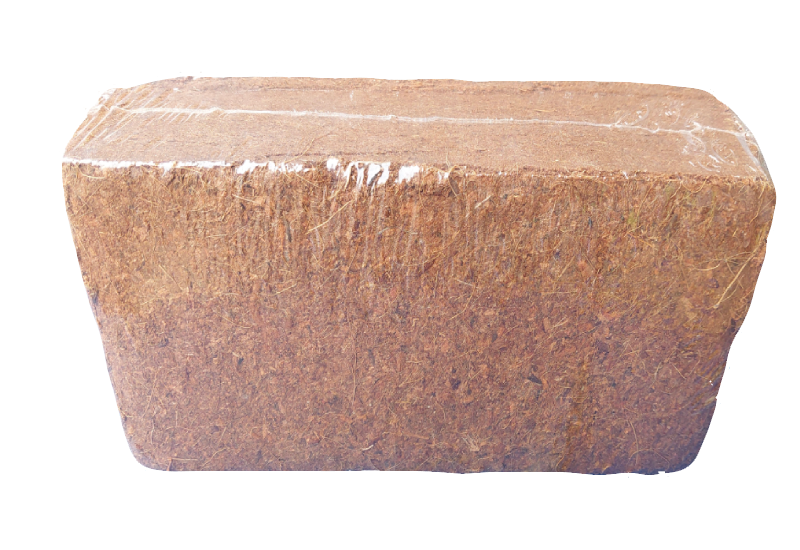
Our compressed coconut fiber block is made from coconut husks. A renewable and biodegradable resource, it is guaranteed to be free of chemical additives. Once rehydrated, it produces a lightweight, uniform substrate that mixes easily with vermiculite and gypsum.
Coconut coir naturally contains trace amounts of minerals, including magnesium and calcium. Its fibrous texture promotes good aeration of the growing medium and helps maintain stable moisture levels during root establishment.
✔️ Superior quality – ISO 9001:2015 certified: We source coconut fiber blocks from ISO 9001:2015-certified manufacturers, ensuring rigorous quality control, consistent production, and a commitment to continuous improvement.
💡 Benefits of coconut coir: Lightweight, compact, easy to store, and simple to prepare, coconut coir retains water very well while maintaining an airy structure. It is ideal as a base for CVG growing media or as a casing layer.
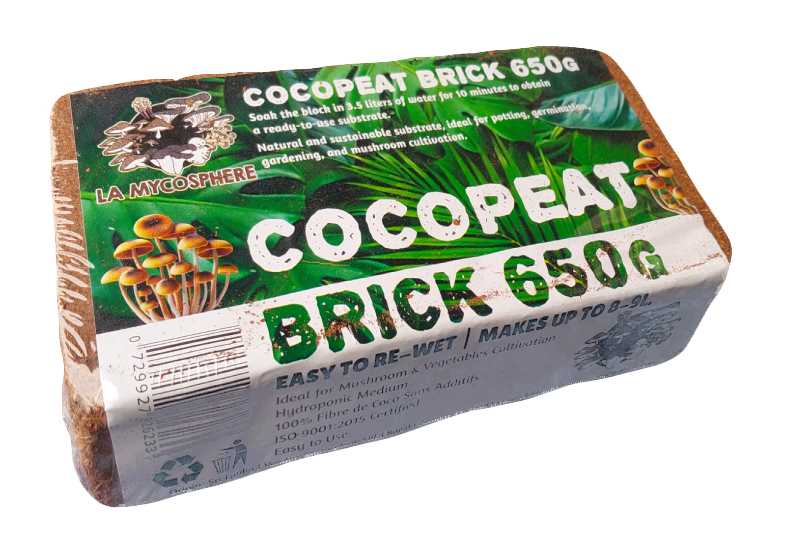
📦 Contents: a compressed block weighing approximately 650 g, which yields about 8 to 9 liters of growing medium once rehydrated with 3.5 liters of water.
🛠️ Use as a CVG substrate
To prepare a balanced CVG substrate, you can use the following recipe:
- 1 block of compressed coconut fiber weighing approximately 650 g;
- about 250 g of dry vermiculite;
- about 50 g of gypsum;
- 3.5 liters of boiling water.
Place the ingredients in a clean bucket, pour in the boiling water, seal tightly, and let it sit. You can cover the bucket with a blanket to retain the heat longer. After 6 to 8 hours, stir vigorously to create a uniform mixture.
The growing medium must reach the proper moisture level, often referred to as field capacity: when you squeeze a handful, the mixture should hold together in a clump and release only a few drops of water. If a lot of water runs out, the growing medium is too wet.
🍄 Recommended vaccination
When growing on CVG, generally use a ratio of about 1:4: one part mycelium on grains to four parts substrate. Higher ratios, such as 1:3 or 1:2, are possible, but they increase costs and are not always necessary.
Use in casing
Coconut fiber can also be used as a casing, that is, as a thin protective layer applied over a fully colonized substrate. Unlike the main substrate, the casing is not intended to provide many nutrients. Its primary purpose is to help maintain stable surface moisture and promote the formation of pins.
For this purpose, apply a thin layer of rehydrated coconut coir—typically between 0.5 and 1.5 cm thick—onto a substrate that is already well-colonized. We recommend pasteurizing the coconut coir before use by rehydrating it with boiling water.
📌 Technical notes
Although coconut coir is relatively stable and low in nutrients, it is still an organic material. Pasteurization is therefore recommended to minimize the risk of contamination. If you add richer materials such as grain, manure, or other sources of nitrogen, sterilization may be preferable depending on your growing method.
Perlite is not necessary in a CVG growing medium. However, it can be used in a fruiting chamber fruiting help maintain humidity level .
Would you like to prepare a complete CVG substrate?
This coconut fiber can be used with our horticultural vermiculite and gypsum to prepare a CVG growing medium suitable for growing plants in containers, boxes, or single-tube systems.
For a simpler solution, check out our complete CVG kit (coconut fiber + vermiculite + gypsum) , with all the ingredients already mixed in the right proportions.
🚫 This product is not intended for human consumption.
This growing medium is intended exclusively for mushroom cultivation, horticulture, or non-food technical applications. It must be used only in accordance with the laws and regulations applicable in your region.
La Mycosphère products must be used solely for lawful purposes. La Mycosphère does not endorse the cultivation of mushrooms that are prohibited in countries or jurisdictions where such cultivation is illegal.

Organic Shiitake - Plug Spawn
€7.80–€59.00
Organic Blue Oyster Mushroom - Plug Spawn
€7.80–€59.00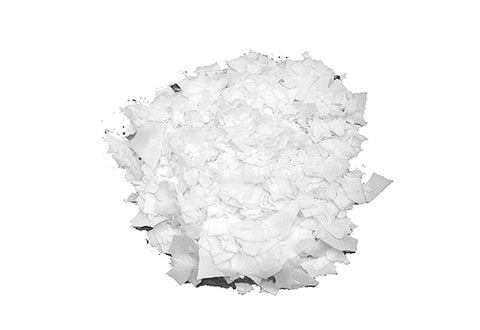
Wax for Log Cultivation
€2.90–€15.90