Organic Eryngii Fruiting Block
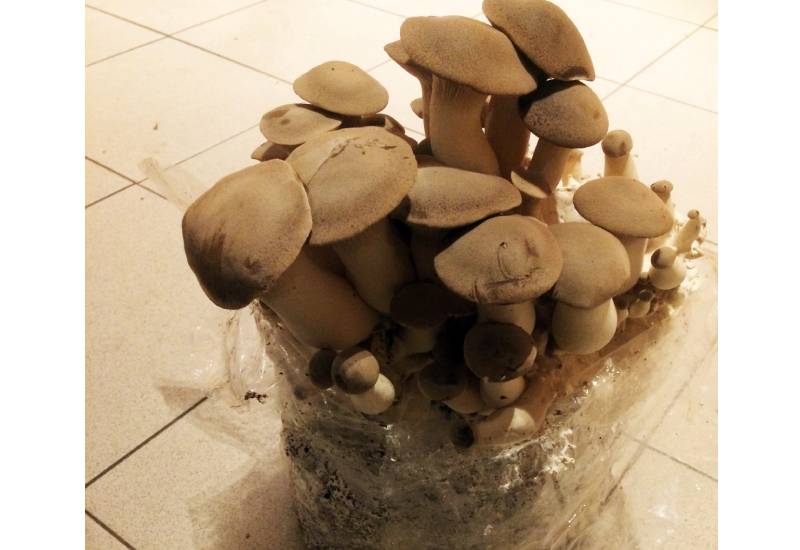
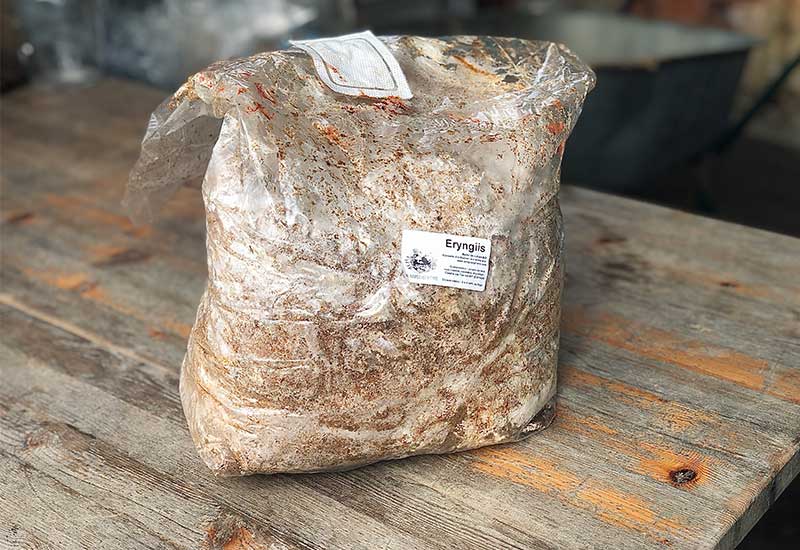
- 🍄 Organic Eryngii Mushroom: Ready to use—just water it and follow the instructions for a successful harvest.
- 💪 GOOD YIELD: harvest .75 to 1 kg of fresh mushrooms over 2 harvests.
- 🍽️ NUTRITIONAL VALUE: Eryngii mushrooms have firm, dense flesh with a subtle almond flavor. They can be prepared as carpaccio.
- 🌍 ORGANIC PRODUCTION: Our blocks are certified organic ("BE-BIO-01") by Certisys (Belgium) and are guaranteed to be free of pesticides and GMOs.
- 📘 INSTRUCTIONS: Download the instructions for the bundle here.
To go with your package


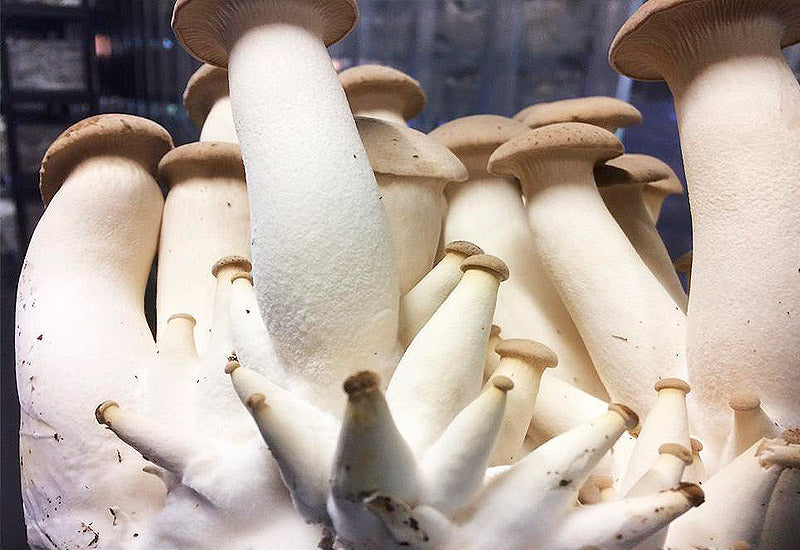
Grow your owneryngii mushrooms, also known as king oyster mushrooms. This variety is prized for its thick stem, firm flesh, and dense texture, which is similar to that of certain wild mushrooms such as porcini.
- Variety: Eryngii, Pleurotus eryngii, king oyster mushroom.
- harvest Between 0.75 and 1 kg of fresh mushrooms over two harvests.
- Ingredients: Water, sawdust, organic grains (including alfalfa), lime, mycelium. Net weight of the bale: ±3 kg.
- Dimensions: 20 x 15 x 20 cm (L x W x H)
-
Origin: Belgium (Mycosphere)
Note: The harvest estimates harvest based on our production experience. They are not guaranteed, as yield depends heavily on growing conditions: temperature, humidity, ventilation, light, and the grower’s experience.
🍄 Variety: Eryngii
Eryngii mushrooms are more difficult to cultivate than traditional oyster mushrooms, but they offer exceptional culinary quality. They generally yield a smaller harvest than gray oyster mushrooms, but the mushrooms are denser, firmer, and keep better.
What sets it apart is its wide, meaty stem, which is the most sought-after part of the mushroom. It has a firm texture that becomes tender when cooked, with a mild, slightly nutty, umami flavor. It’s ideal for pan-frying, grilling, slicing thickly to serve as vegetarian “scallops,” stir-frying, and simmering in stews.
To grow high-quality eryngii mushrooms, the growing conditions must be cooler and more stable than those for oyster mushrooms. The fruiting often slower, but the result is particularly appealing in the kitchen.
Our commitment to quality:

We produce our mycelium in laboratory conditions, thereby ensuring the purity of the strains and optimal quality.
We produce our mycelium using 100% organic methods, and all our products are certified “BE-BIO-01, Agriculture Belgique” by CERTISYS.

📦 How to Use the Bundle
Store the bundle in the refrigerator if you can't use it right away; ideally, keep it there for no more than 2 weeks. Eryngii mushrooms prefer cool conditions, so they're easier to grow in the fall, winter, or spring. In the summer, choose the coolest spot possible.
For this variety, we recommend top-fruiting cultivation, which involves leaving an opening at the top of the growing bag. This method promotes vertical growth and the development of thicker stems, which are typical of eryngii mushrooms.
- Place the bundle upright in a well-lit room, but out of direct sunlight.
- Open the top of the bag above the substrate, without completely removing the plastic.
- Fold the edges of the bag slightly outward to create a neat opening at the top.
- Keep the plastic wrapped around the block: it helps retain moisture and prevents the growing medium from drying out.
- Keep the surface of the growing medium slightly moist until the young mushrooms appear.
- While the pins are emerging, maintain high humidity, ideally around 90 to 95%.
- When the mushrooms begin to grow, slightly reduce the humidity to around 85 to 90% to prevent excess moisture from accumulating on the mushrooms.
- Ventilate regularly, but avoid direct drafts: eryngii mushrooms need fresh air, while maintaining a humid and stable environment.
Avoid wetting the young mushrooms directly. It is better to humidify the air around the bundle or the walls of a small grow chamber rather than spraying directly onto the pins.
Use our mini-sprayer or our professional misters to maintain adequate humidity around the bale.
⚙️ Recommended growing conditions
| fruiting temperature | 12–18°C. Ideal: 14–16°C |
| Relative humidity | 90–95% at the start, then 85–90% during growth |
| The Appearance of pins | About 7 to 14 days after opening, depending on conditions |
| Time until harvest | About 7 to 14 days after the young mushrooms appear |
| Aeration / CO₂ | Moderate ventilation. Avoid stagnant air, but also dry drafts. |
| Light | Indirect light, approximately 500 to 1,500 lux |
| Number of harvests | Usually two harvests, sometimes three under very good conditions |
Note: Eryngii mushrooms are very sensitive to growing conditions. Temperatures that are too high or a lack of ventilation can result in thinner mushrooms with more developed caps and a less typical shape. Conversely, cool, humid, and stable conditions promote thicker stems and better culinary quality.
🌱 Where should you grow it?
Grow your bundle indoors: in the kitchen, basement, garage, laundry room, or a room that isn’t very warm. Eryngii mushrooms need a little light to grow properly, but avoid direct sunlight, radiators, and dry drafts.
The goal is to maintain a humid environment around the log without soaking the mushrooms. A small grow tent, a grow box, or a fruiting chamber fruiting help maintain more stable humidity levels.
🔄 harvest
Harvest eryngii mushrooms when the stems are well-developed, firm, and meaty, and the caps are still slightly domed. Avoid waiting until the caps have flattened completely or curled up significantly: the texture becomes less delicate, and they won’t keep as well.
To harvest, gently grasp the mushroom at the base and twist it. You can also make a clean cut at the base with a clean knife. Remove any remaining stems or old mushrooms to prepare for the harvest .
The first harvest usually the most abundant and of the highest quality. The second harvest often smaller, but can produce beautiful mushrooms if the log remains well-moistened.
💡 Tips for Future Harvests
After the first harvest, let the ballot rest for a few days, keeping it well-moistened. To encourage a second harvest, you can:
- Rehydrate the bundle by soaking it overnight in clean water, then drain it thoroughly before returning it to the growing medium;
- Give it a gentle cold shoc placing the bundle overnight in a cool place, such as the refrigerator or a cool room;
- Check that the surface of the substrate is not dry;
- Maintain high humidity without directly wetting the young mushrooms.
A side opening, as used for oyster mushrooms, is possible but is not our recommended method for eryngii. This method may produce mushrooms that more closely resemble traditional oyster mushrooms, with more developed caps and thinner stems.
🍳 Cooking Tips
Every part of the eryngii mushroom is edible: the stem is actually the most sought-after part. Its firm texture makes it easy to cut into thick slices, strips, or rounds.
For a simple preparation: slice the stems, sauté them over medium-high heat with a little oil or butter, then add salt, pepper, garlic, soy sauce, parsley, or fresh herbs toward the end of cooking. When properly seared, eryngii mushrooms develop a firm, tender, and very flavorful texture.
📦 Storage
Eryngii mushrooms generally keep better than regular oyster mushrooms because of their dense flesh. Place them in a paper bag in the refrigerator and eat them within 7 to 14 days of harvest.
To extend their shelf life, you can freeze them after cooking, dry them, or preserve them in jars using your usual recipes.
Legal notice for Belgium: “Organic growing medium: pasteurized and inoculated mushroom growing medium” (Exemption No. EM470.J). Do not consume the growing medium.
View all our delivery times